
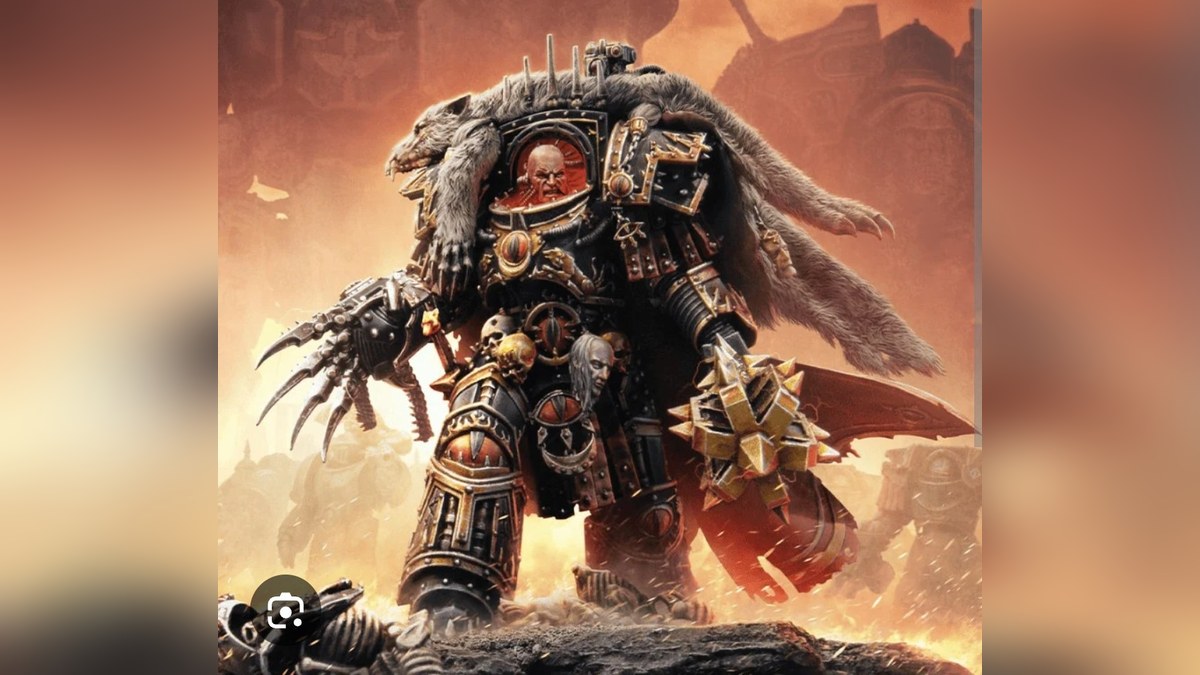
The Horus Heresy is the civil war that broke the Imperium of Man: ten thousand years before the main Warhammer 40,000 setting, the Emperor's favourite son Horus turned against his father and took half of the Space Marine Legions with him. It ended with the Emperor on the Golden Throne, Horus dead, and a galaxy that has never recovered. Almost everything in 40K, from Chaos Space Marines to the way Chapters are organised, traces back to it. Here is the whole story in plain English, in the order it happened.
Lore page, last updated November 8, 2026. Summarised in our own words from Games Workshop rulebooks, the Black Library Horus Heresy and Siege of Terra novels, Warhammer Community articles and community wikis. The Heresy has been retold many times since the 1980s, and some events (especially the final duel) are told differently in older and newer sources. Where the lore differs, we say so.
The Horus Heresy in 30 seconds
| What it was | A galaxy-wide civil war inside the young Imperium |
| When | The very start of the 31st millennium, around ten thousand years before 40K, lasting roughly seven years |
| Who started it | Horus Lupercal, Warmaster of the Imperium, corrupted by the Chaos Gods |
| Traitor Legions | Nine: Emperor's Children, Iron Warriors, Night Lords, World Eaters, Death Guard, Thousand Sons, Sons of Horus, Word Bearers, Alpha Legion |
| Loyal Legions | Nine: Dark Angels, White Scars, Space Wolves, Imperial Fists, Blood Angels, Iron Hands, Ultramarines, Salamanders, Raven Guard |
| Key battles | Isstvan III, the Dropsite Massacre at Isstvan V, Prospero, Calth, Signus, the Siege of Terra |
| How it ended | The Emperor killed Horus aboard the Vengeful Spirit but was left a broken husk on the Golden Throne |
| Aftermath | The Great Scouring, the Codex Astartes, Legions split into Chapters, the traitors' Long War |
| Where to read it | Black Library's Horus Heresy series (54 books) and the Siege of Terra series that finishes it |
Before the war: the Great Crusade
To understand the betrayal, you need to know what came before. After the long dark age of Old Night, the Emperor of Mankind united Terra and set out to reunite every scattered human world in the galaxy. This was the Great Crusade.
To fight it, he made two kinds of weapons. The first were the Primarchs, twenty super-human sons built from his own genetic material. The second were the Space Marine Legions, armies of genetically enhanced warriors, one Legion for each Primarch. Before the Primarchs could grow up, a mysterious force scattered the infant Primarchs across the galaxy. The Emperor found them one by one over the course of the Crusade and gave each command of his own Legion. You can meet them all on our all 20 Primarchs page.
Two Primarchs and their Legions, the Second and the Eleventh, were later wiped from the records. Nobody in the setting will say why, and Games Workshop has kept it a mystery on purpose. That leaves eighteen Legions to take sides.
The Emperor's great lie was that the Imperium had no gods. He banned religion and called his rule the Imperial Truth, a vision of a galaxy built on reason. He knew the truth about the Warp and the Chaos Gods living in it, but he did not tell his sons the full story. That secret is the crack the whole war grew from.
Horus becomes Warmaster
Horus was the first Primarch the Emperor found, and the closest to him. He was charming, brilliant and loved by his brothers. After the great victory over the Orks at Ullanor, the Emperor did something unexpected: he returned to Terra and named Horus Warmaster, commander of all the Imperium's armies. Horus's Legion, the Luna Wolves, was renamed the Sons of Horus in his honour.
Not everyone was happy. Some brothers were jealous. Horus himself felt abandoned, left to fight the war while his father hid away on Terra working on a secret project. Meanwhile bureaucrats of the new Council of Terra started giving orders to warriors who had bled for the Crusade. Resentment grew in the cracks, and someone was watching for it.
That someone was Lorgar of the Word Bearers. Years earlier, the Emperor had humiliated Lorgar for worshipping him as a god. Hurt and searching for something to believe in, Lorgar found the Chaos Gods, and with his mentor Kor Phaeron and his scheming First Chaplain Erebus, he planned to bring the rest of the Legions with him. Horus was the prize.
The fall at Davin
The fall began on the world of Davin. Erebus helped arrange a crisis there: a former Imperial commander, Eugan Temba, had turned against the Imperium. When Horus went to deal with it in person, Temba wounded him with a cursed blade, the Anathame. It was a wound no Apothecary could heal.
We may earn a commission from links on this page.
As Horus lay dying, his officers carried him to a temple of the local warrior lodges on Davin's moon, on Erebus's advice. There, in a fevered dream, the Chaos Gods showed Horus a future in which the Emperor was worshipped as a god and the Primarchs were forgotten. They offered him the power to stop it. Horus accepted. He woke healed, and from that moment he was theirs. This part of the story is told in False Gods, the second novel of the series.
Horus did not declare war straight away. He spent time quietly winning over his brothers, using their grudges, pride and wounds. Angron, Fulgrim, Mortarion, Perturabo, Konrad Curze and the mysterious Alpharius all ended up on his side, each for his own reasons.
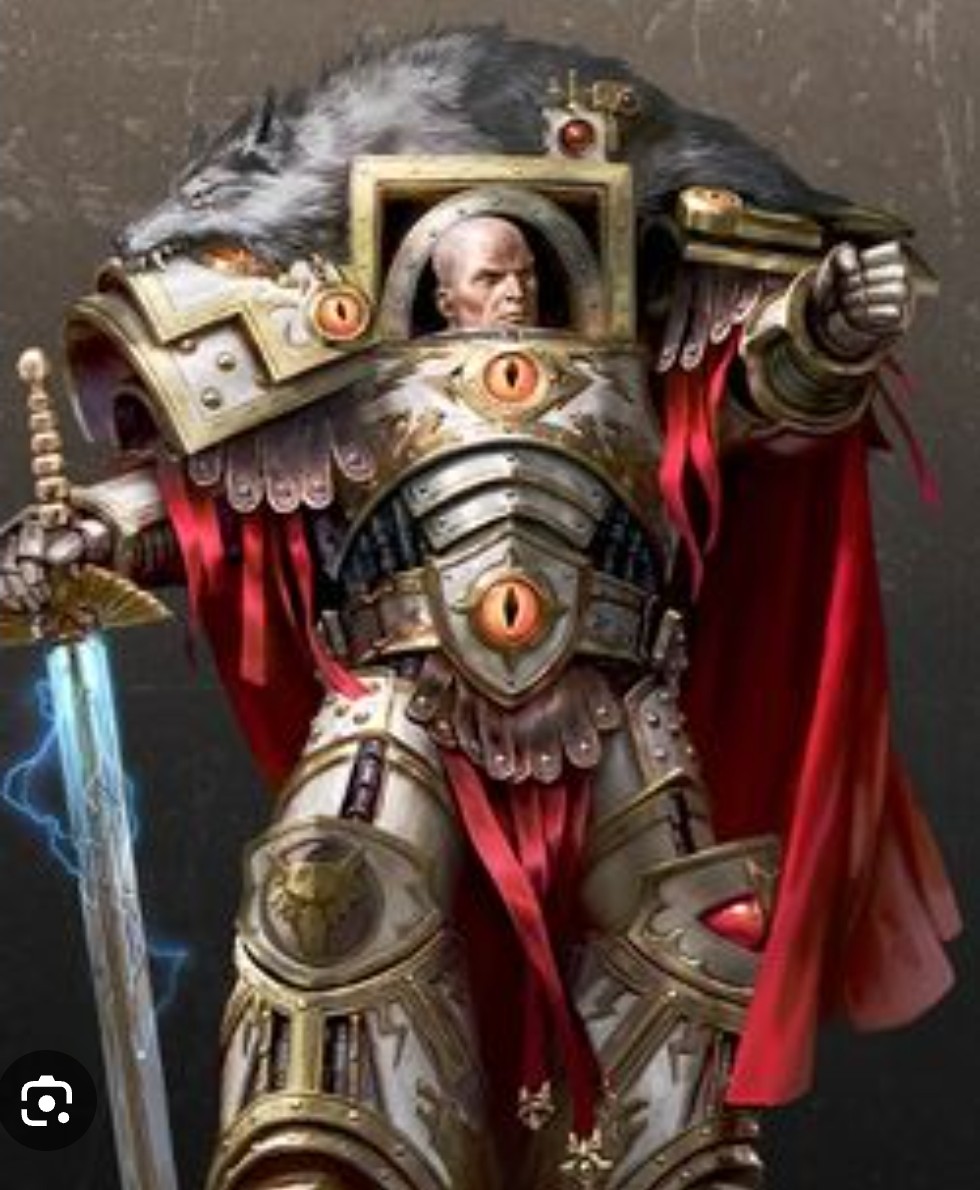
Isstvan III: the purge of the loyalists
The first open act of the war came at Isstvan III. The planet had rebelled, and Horus brought four Legions to crush it: his own Sons of Horus, the World Eaters, the Emperor's Children and the Death Guard. But Horus had a second goal. Each of those Legions held warriors who would never betray the Emperor, so Horus sent them down to the surface first.
Once they were on the ground, the traitors bombarded the planet with virus bombs, killing billions in moments. A loyal Death Guard captain, Nathaniel Garro, found out about the plan and fled aboard the frigate Eisenstein to warn Terra. On the surface, survivors such as Garviel Loken and Saul Tarvitz held out in the ruins against their former brothers for as long as they could. Isstvan III is the subject of Galaxy in Flames, and Garro's escape is told in Flight of the Eisenstein.
Isstvan V: the Dropsite Massacre
Warned of the betrayal, the Emperor sent seven Legions to punish Horus in the Isstvan system. The first wave was the Iron Hands, Salamanders and Raven Guard, led by Ferrus Manus, Vulkan and Corvus Corax. They landed on Isstvan V and charged the traitor lines.
The second wave was the Night Lords, Iron Warriors, Word Bearers and Alpha Legion. They were supposed to be reinforcements. Instead, once the loyalists were committed, they turned their guns on them. Caught between two traitor armies, the first wave was slaughtered. This is the Dropsite Massacre, the single worst betrayal of the war. Sources broadly agree that the great majority of the loyalists on the ground died that day.
Ferrus Manus was killed by his closest brother, Fulgrim, who took his head. Vulkan and Corax barely escaped, and Vulkan's fate stayed uncertain for years in the books. The survivors of the three broken Legions became known as the Shattered Legions, and many of them fought on as hidden, vengeful raiders for the rest of the war.
The two sides
After Isstvan, the lines were drawn. Here is who stood where.
The traitors: the Emperor's Children (Fulgrim), Iron Warriors (Perturabo), Night Lords (Konrad Curze), World Eaters (Angron), Death Guard (Mortarion), Thousand Sons (Magnus), Sons of Horus (Horus), Word Bearers (Lorgar) and Alpha Legion (Alpharius). Big parts of the Imperial Army, the Mechanicum and the Titan Legions joined them too.
The loyalists: the Dark Angels (Lion El'Jonson), White Scars (Jaghatai Khan), Space Wolves (Leman Russ), Imperial Fists (Rogal Dorn), Blood Angels (Sanguinius), Iron Hands, Ultramarines (Roboute Guilliman), Salamanders and Raven Guard.
It was never perfectly clean. Some warriors in traitor Legions stayed loyal, and the Alpha Legion's true goals are still argued about by fans. The Dark Angels and White Scars both had moments in the books where their loyalty looked shaky. But the nine-and-nine split is the version everyone agrees on.
Prospero burns
The Thousand Sons are the strangest traitors, because they did not start out as traitors at all. Their Primarch, Magnus the Red, was a powerful psyker. When he saw Horus's betrayal coming, he used forbidden sorcery to send a warning straight to the Emperor's mind on Terra. The spell smashed through the Emperor's secret project beneath the Palace, a doorway into the Webway, and let daemons pour in.
The Emperor was furious. He ordered Leman Russ and the Space Wolves to bring Magnus back to Terra. Horus, as Warmaster, twisted that order into a command to destroy him. The Space Wolves, with the Sisters of Silence and the Custodes, fell on the Thousand Sons' homeworld of Prospero and burned it. With his Legion dying, Magnus turned to the god Tzeentch to save the survivors, and that choice made the Thousand Sons traitors in fact. Black Library tells this from both sides, in A Thousand Sons and Prospero Burns.
Calth: the Ultramarines betrayed
The Ultramarines missed Isstvan. They were gathering at the world of Calth, on orders from Horus, supposedly to meet the Word Bearers for a joint campaign. It was a trap. The Word Bearers arrived as friends, then opened fire without warning, wrecking the Ultramarines fleet and poisoning Calth's sun.
The Battle of Calth became a long, bitter war. The surface became unliveable, and the fight dragged into underground tunnels and arcologies in what became known as the Underworld War. Guilliman survived, but the Word Bearers' wider assault on his realm, the Shadow Crusade, kept the Ultramarines tied up far from Terra. Calth also left Guilliman with a lasting hatred of the Word Bearers. Read it in Know No Fear by Dan Abnett.
Signus: the Blood Angels and the daemons
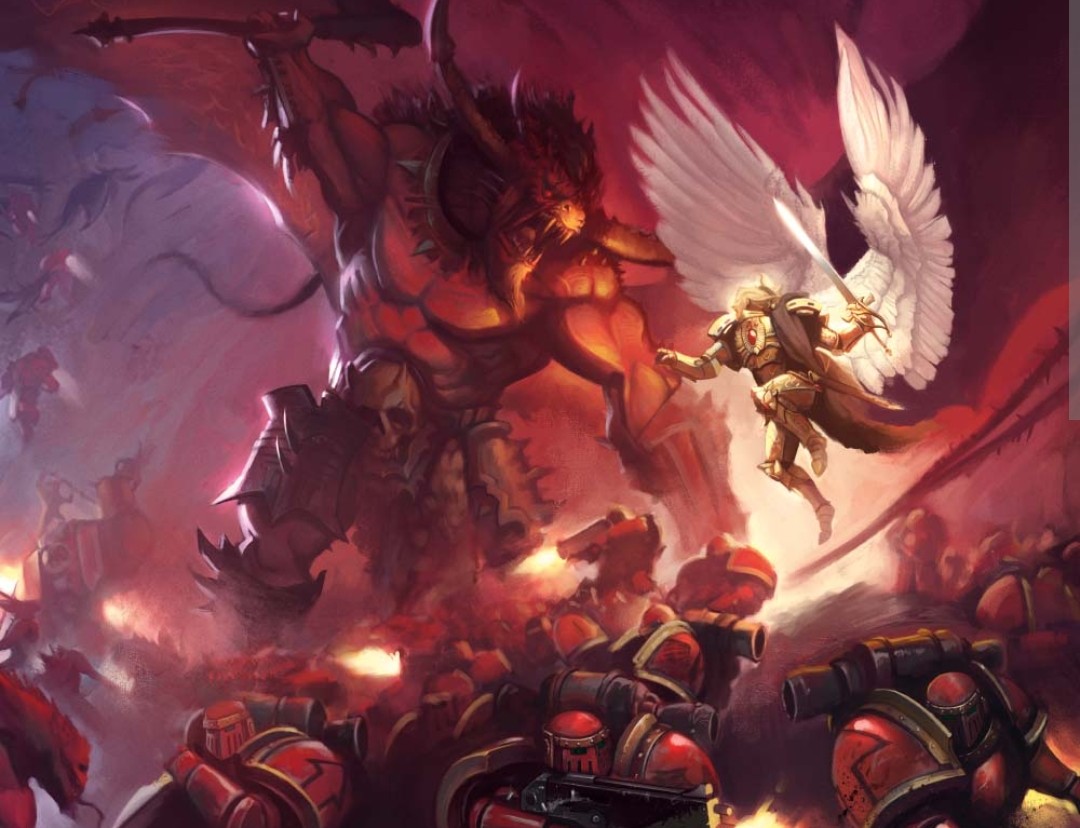
Horus had a special trap for Sanguinius, the angelic Primarch of the Blood Angels. He sent the Blood Angels to the Signus Cluster, where the Word Bearers had prepared a nightmare. The worlds there were flooded with daemons, and the Blood Angels fought the Bloodthirster Ka'Bandha.
The aim was to awaken the dark flaw hidden in the Blood Angels' blood and bring them over to Khorne. It did not work. Sanguinius fought his way free and kept his Legion loyal, though the flaw in their blood has haunted them ever since, later surfacing as the Red Thirst and the Black Rage. This is the story of Fear to Tread.
The long middle of the war
Between the opening battles and the final siege came years of fighting across the galaxy. Guilliman built a second empire, Imperium Secundus, around Macragge when Terra seemed lost behind daemon-filled warp storms. The Dark Angels and Night Lords fought a private war of their own. The White Scars raced to break through to Terra. The Shattered Legions hunted traitors in the shadows.
Black Library's main Horus Heresy series spends dozens of books on this middle period, and it is where much of the fun side-story lives. If you are new, you do not need every book. The key point is simple: while the loyalists were scattered and slowed, Horus gathered his strength and aimed straight for Terra.
The Siege of Terra
About seven years after Isstvan, Horus reached Earth. The Siege of Terra was the biggest battle of the war, and possibly the biggest in human history. First came the war for the Sol system itself, then the traitor armies landed and threw themselves at the Imperial Palace.
Rogal Dorn, the master of defence, commanded the walls. Sanguinius held the last gate. Jaghatai Khan led the White Scars on fast counter-attacks. On the traitor side, Perturabo ran the siege works and the other traitor Primarchs, now becoming daemons themselves, brought armies of the Warp. The walls fell one after another, and the defenders were pushed back towards the very heart of the Palace.
Then, at the worst moment, the loyalist reinforcements, Guilliman, the Lion and Russ, were finally drawing close. Horus knew time was running out. He lowered the shields of his flagship, the Vengeful Spirit, in orbit. Whether that was arrogance, a dare, or a trap is something the sources leave open. The Emperor took the challenge.
The duel on the Vengeful Spirit
This is the most famous moment in all of Warhammer, and different sources tell it in slightly different ways.
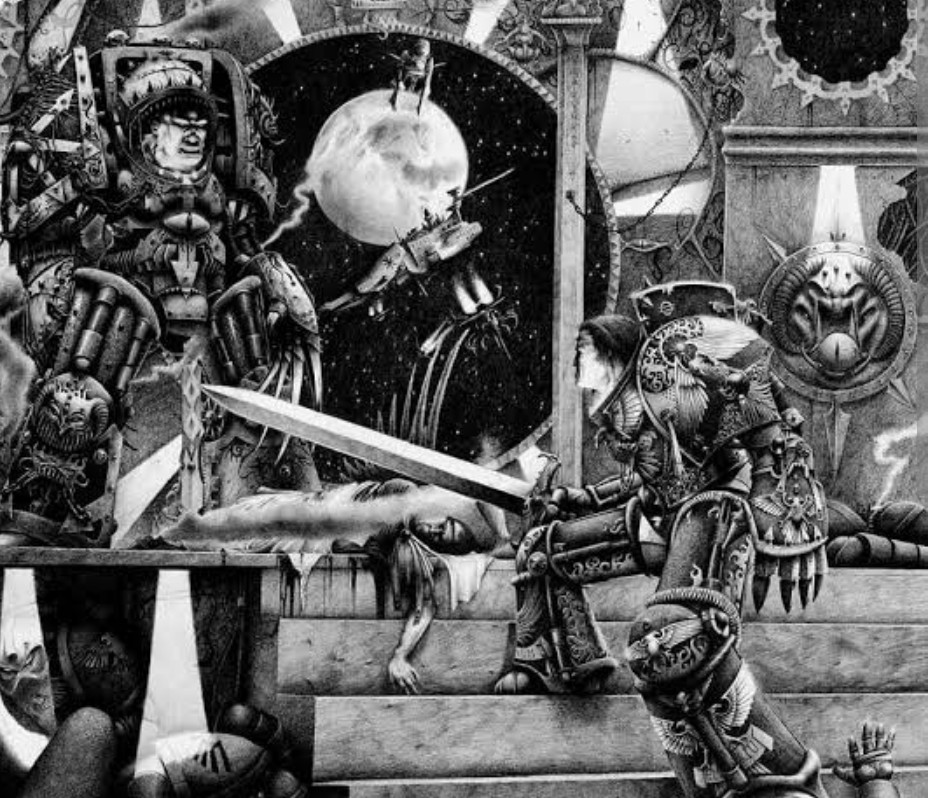
In the classic version from older rulebooks, the Emperor teleports aboard with a small strike force, including Rogal Dorn and Sanguinius, and they are separated. Sanguinius finds Horus first, fights him alone and dies. The Emperor arrives to find his angelic son dead at Horus's feet.
In The End and the Death, Dan Abnett's three-volume finale to the Siege of Terra series, the order is reworked: Sanguinius goes aboard first, faces Horus, and is slain, and the Emperor follows to confront his son. The heart of it stays the same either way: Sanguinius dies, and the Emperor faces Horus alone.
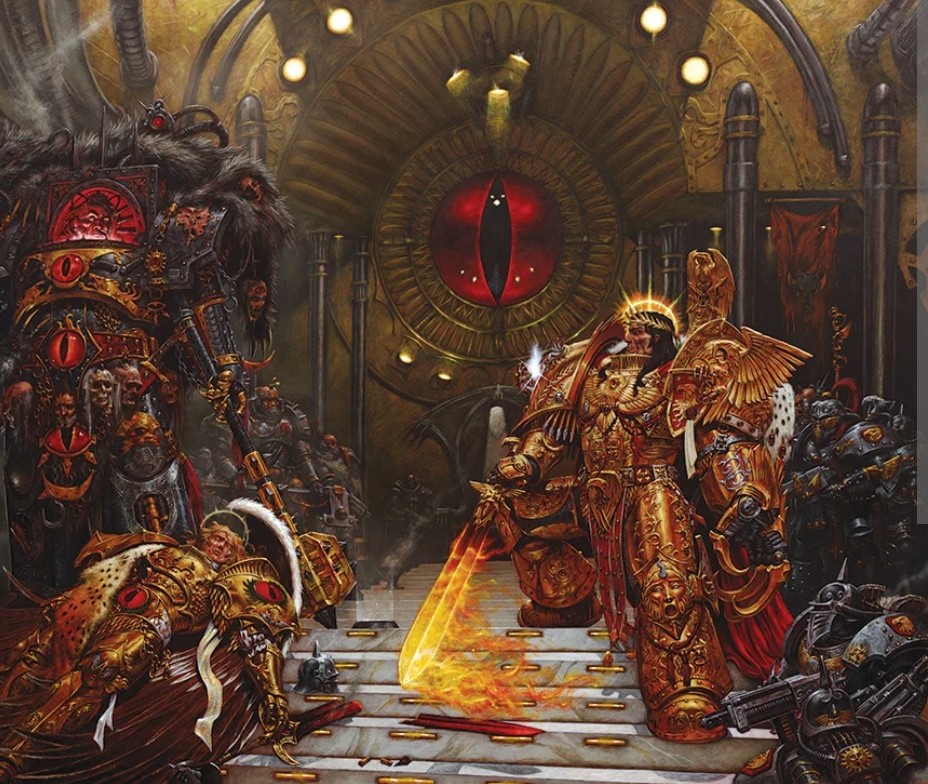
The duel itself is fought in both body and spirit. Horus, full of the power of all four Chaos Gods, badly wounds the Emperor. At first the Emperor holds back, hoping to save his son. When he finally accepts that Horus cannot be saved, he strikes with everything he has and destroys Horus utterly, body and soul. In the older telling, a single loyal warrior (an Imperial Fist in most early versions) is killed in front of the Emperor, and that is what makes him stop hesitating; The End and the Death gives that moment to the soldier Ollanius Persson. Either way, Horus dies, and with him the traitor assault collapses.
The Emperor on the Golden Throne
The Emperor won, but he was dying. Rogal Dorn found him and carried his broken body back to the Palace. There he was placed on the Golden Throne, a vast machine that keeps him alive, barely. He has sat there ever since, a living corpse whose mind still guides ships through the Warp with the beacon called the Astronomican.
The Emperor never spoke again in any way most people could understand. The religion he had banned grew up around him anyway, and in time he became the god-emperor of the Imperial Cult. It is one of the bleakest ironies in the setting: Horus fell partly because of a vision of the Emperor worshipped as a god, and his rebellion helped make that vision come true. See our Emperor of Mankind page for more.
The aftermath
The Great Scouring
With Horus dead, the traitor armies broke and ran. The loyalists chased them across the galaxy in the Great Scouring, a long campaign to drive them out of Imperial space. Most of the traitors fled into the Eye of Terror, a huge warp storm where the Warp and real space overlap. Their Primarchs became daemon princes, or vanished.
The Codex Astartes
Roboute Guilliman, who had kept his Legion and his realm most intact, wrote the Codex Astartes, a huge rulebook for how Space Marines should fight and be organised. Its most important rule was that no Space Marine force should ever again be as big as a Legion.
Legions broken into Chapters
In the Second Founding, the loyal Legions were split into Chapters of about a thousand warriors each. The Ultramarines produced the most successor Chapters. Some Primarchs hated this. Leman Russ and Rogal Dorn in particular argued against it, but it went ahead. This is why 40K has hundreds of Space Marine Chapters instead of nine big Legions.
The Long War
For the traitors, the war never ended. They call their endless struggle against the Imperium the Long War. Horus's own Legion fell apart and was later rebuilt under Abaddon the Despoiler, Horus's former First Captain, as the Black Legion. Abaddon's Black Crusades, and the Chaos Space Marines you play in 40K today, are all part of that same war, still being fought ten thousand years later.
Where to read more
The full story is told in two big Black Library series. You do not need to read every book. Here is a friendly starting path.
- Horus Rising (Dan Abnett): book one of the Horus Heresy series, set just before the fall. Read this first.
- False Gods and Galaxy in Flames (Graham McNeill, Ben Counter): Davin and Isstvan III. Together with Horus Rising they form the opening trilogy.
- Fulgrim (Graham McNeill): the fall of the Emperor's Children and the Dropsite Massacre.
- Know No Fear (Dan Abnett): the Battle of Calth, and one of the best books in the series.
- A Thousand Sons and Prospero Burns: the burning of Prospero from both sides.
- The Solar War (John French): book one of the Siege of Terra series, which picks up where the main series ends.
- The End and the Death (Dan Abnett): the three-volume finale with the duel on the Vengeful Spirit.
If you would rather play it than read it, the tabletop game Warhammer: The Horus Heresy, Age of Darkness lets you build your own Legion and fight the battles of the war yourself.
More from the Heresy: meet all 20 Primarchs, read about Horus Lupercal, and see how Abaddon carried his war into the 41st millennium.
FAQ
What is the Horus Heresy in simple terms?
It is the civil war in which Horus, the Emperor's favourite son and Warmaster, betrayed him and led half the Space Marine Legions in rebellion. It ended at the Siege of Terra with Horus dead and the Emperor on the Golden Throne.
Why did Horus betray the Emperor?
He was wounded on Davin and, while near death, the Chaos Gods showed him visions and offered him power. His own resentment at being left to fight while the Emperor returned to Terra made him ready to listen. The Word Bearers had planned his fall for years.
How long did the Horus Heresy last?
Around seven years from Isstvan to the end of the Siege of Terra, though the exact dates vary a little between sources.
Which Legions turned traitor?
Nine: the Emperor's Children, Iron Warriors, Night Lords, World Eaters, Death Guard, Thousand Sons, Sons of Horus, Word Bearers and Alpha Legion.
Who killed Sanguinius?
Horus did, aboard the Vengeful Spirit, shortly before the Emperor's final duel with him.
Where should I start reading the Horus Heresy?
Start with Horus Rising, the first book of Black Library's Horus Heresy series. When you are ready for the ending, the Siege of Terra series begins with The Solar War and ends with The End and the Death.
Lore summarised in our own words from Black Library novels, codexes and community wikis. Warhammer and all related names are trademarks of Games Workshop; WIZY is an independent fan site.
Sources
- Lexicanum: Battle of Isstvan III wh40k.lexicanum.com
- Lexicanum: Drop Site Massacre wh40k.lexicanum.com
- Warhammer Community: How one act of betrayal shattered three Legions in just three hours warhammer-community.com
- Warhammer Community: The End and the Death Volume I is nearly here, catch up on the Siege of Terra warhammer-community.com
- Warhammer Community: Black Library pre-orders, The End and the Death Part II warhammer-community.com