October and November 2026 have brought a wave of crypto hacks, led by the $6.3 billion Binance breach, the biggest on record. This page tracks every major hack and security incident we've covered, what was taken, whether users lost money, and how to protect yourself. We add new incidents as they happen.
This page has affiliate links: if you buy through them, WIZY may earn a small commission at no extra cost to you. As an Amazon Associate I earn from qualifying purchases.
Last updated November 3, 2026. Amounts are early estimates and often change as investigations continue. Click through to each article for sources and the latest updates.
Crypto hacks at a glance
| Date | Platform | Amount | Did users lose money? |
|---|---|---|---|
| Nov 2 | Mercado Bitcoin (Brazil) | About $40M to $46M | No, the exchange says it's covered |
| Oct 29 | Binance | About $6.3B | No, covered from company funds |
| Oct 29 | Polymarket (international) | About $2.7M | Refunds pledged |
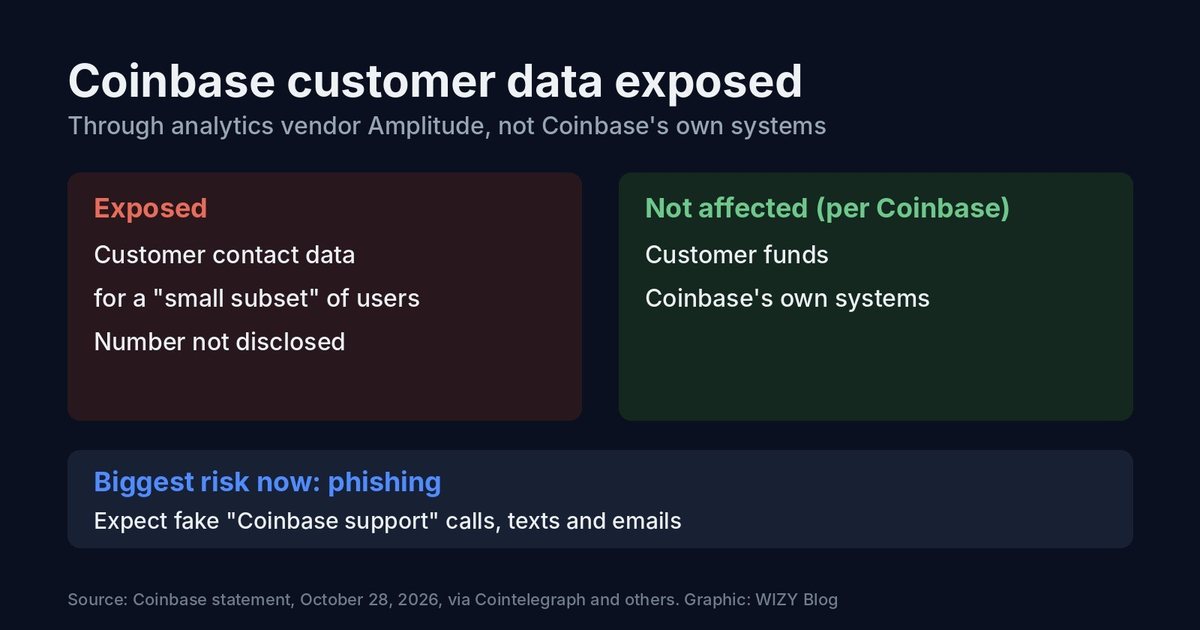
| Oct 28 | Coinbase (via vendor Amplitude) | Contact data, no funds | No funds taken; phishing risk |
| Oct 27 | Keystone hardware wallets | Verification key and customer data | No funds reported; 18,835 devices to be destroyed |
| Oct 25 | Initia blockchain | About $2.6M | Network halted |
Binance: the biggest crypto hack ever
On October 29, billions of dollars flowed out of Binance's hot wallets. Binance now puts the loss at about $6.3 billion, around four times the $1.5 billion Bybit hack of 2025. The FBI blames North Korea's TraderTraitor group, which North Korea denies. Binance paused withdrawals for about 45 hours, covered user losses from its SAFU fund, insurance fund and treasury, and reopened withdrawals on November 1. Net outflows since then have reached about $4.7 billion. Full Binance hack coverage and timeline.
Mercado Bitcoin: Brazil's largest exchange halts withdrawals
Days after Binance, attackers drained Mercado Bitcoin's wallets across at least 10 blockchains, with losses estimated at $40 million to $46 million. The exchange halted deposits and withdrawals on November 2 and says no customer lost money. Read the Mercado Bitcoin story.
Polymarket: a third-party provider was the weak spot
The prediction market's international platform lost about $2.7 million on October 29 after one of its outside providers was compromised. The US platform wasn't affected, and Polymarket pledged full refunds. Read the Polymarket story.
Coinbase and Keystone: data and trust, not coins
Not every incident drains wallets. Coinbase says a breach at its analytics vendor Amplitude exposed some customers' contact details, which means more phishing emails and fake "support" calls. What Coinbase users should do.
Hardware wallet maker Keystone says attackers stole the key it uses to check that its devices are genuine and leaked customer data. It will destroy 18,835 devices in stock. What Keystone owners should do.
Initia and Bitcoin Core: bugs in the code
A day-zero bug let an attacker mint unbacked tokens on Initia and move about $2.6 million out, forcing the whole network to halt. Read the Initia story.
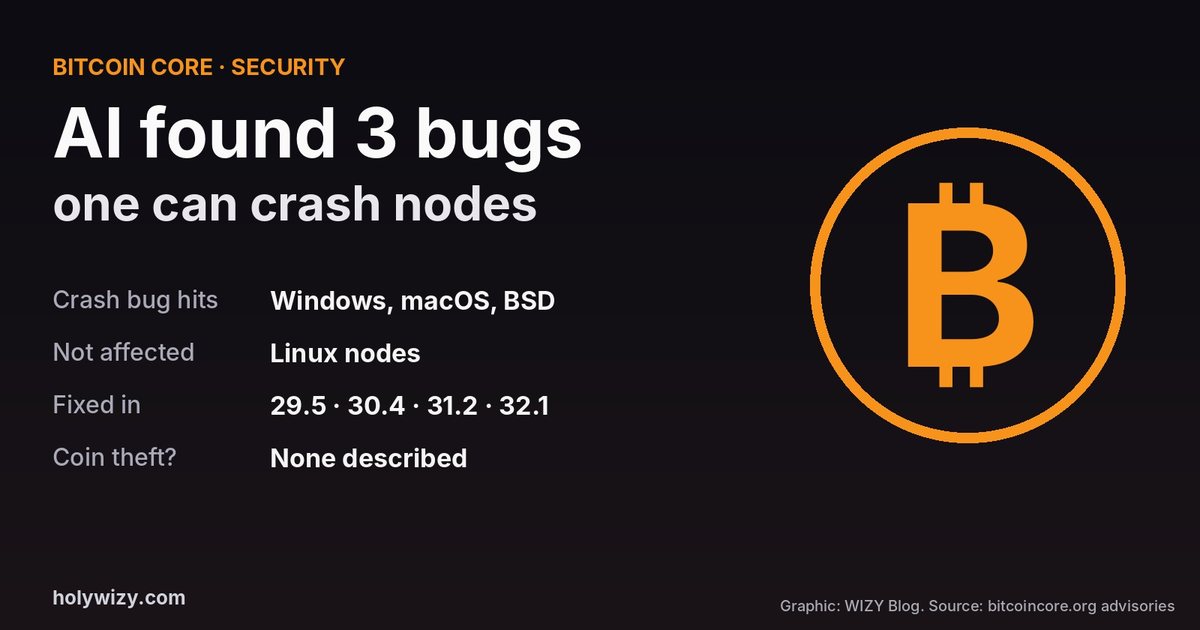
Bitcoin itself wasn't hacked, but an AI scanner found three bugs in Bitcoin Core, one of which can crash Windows and Mac nodes. Fixes are out. What node runners need to update.
Like this kind of news? Get the WIZY weekly: one email every Sunday, no spam.
How to protect your crypto
- Don't keep everything on an exchange. Exchange hot wallets are the biggest target. Keep only what you trade there.
- Use a hardware wallet for savings, bought only from the maker's official store or an authorized seller, never second-hand. A Ledger hardware wallet is one popular option.
- Expect phishing after every breach. No exchange will ever ask for your seed phrase, password or 2FA code by email, text or phone.
- Turn on app-based 2FA (not SMS) and a withdrawal whitelist on every exchange account.
- Ignore "recovery" offers. People who promise to get hacked funds back for a fee are scammers.
My take
Two weeks, six incidents, and one of them is the largest theft in crypto history. The good news is that the biggest platforms covered their users this time. The lesson is the same as always: an exchange account is not a wallet. If you're holding long term, move it to a wallet you control, and treat every "urgent" message after a hack as a scam until proven otherwise.
Follow WIZY Blog on Reddit: r/HolyWizy
Sources
- Binance hack coverage (WIZY Blog) holywizy.com
- CoinDesk: Binance outflows hit $4.7 billion coindesk.com

Written by the WIZY creator
A lifelong gamer and Warhammer painter from Calgary, Canada, and the maker of the Crusade Journal and the WIZY RPG game. I write about games, hardware, Warhammer and crypto in plain English, and I check every fact against its source.