
We may earn a commission from links on this page.
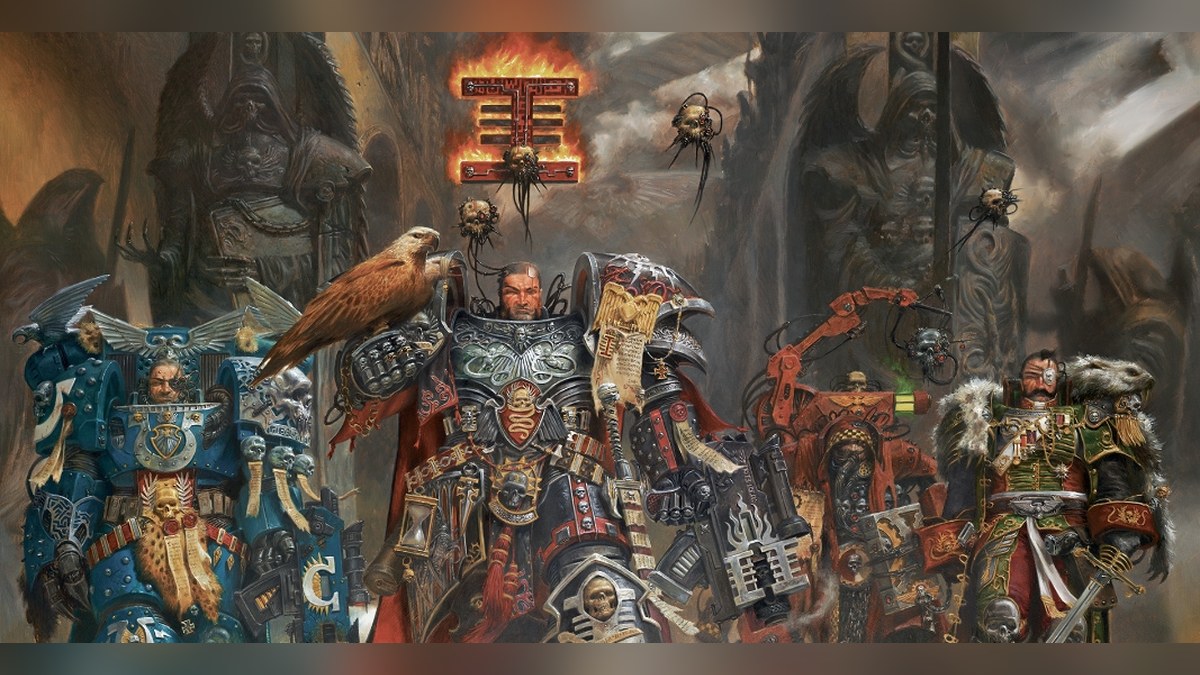
The Inquisition is the Imperium's secret police and its most feared organisation. Inquisitors hunt heretics, aliens and daemons, answer to nobody but the Emperor himself, and can order the death of an entire planet if they decide it is necessary. If you play Imperial Agents, or you have ever wondered what an Inquisitor actually does all day, this page explains it in plain English: where the Inquisition came from, how it is organised, why Inquisitors fight each other, and who the famous ones are.
Lore page, last updated November 15, 2026. Summarised in our own words from codexes, Black Library novels, Warhammer Community articles and community wikis. The Inquisition is secret by nature, and even its own origins are wrapped in legend. Where the lore is unclear or different books disagree, we say so.
The Inquisition in 30 seconds
| What it is | The Imperium's secret service and hunter of its worst enemies, inside and out |
| Founded | In the aftermath of the Horus Heresy. The best-known story credits Malcador the Sigillite, but there are at least two versions and the details are deliberately murky |
| Main branches | The three great Ordos: Malleus, Hereticus and Xenos |
| Power | An Inquisitor can command almost anyone in the Imperium. Officially, the Inquisition answers only to the Emperor |
| Symbol | The Inquisitorial "I" and the rosette |
| Ultimate weapon | Exterminatus: destroying all life on a planet |
| Fighting arms | Grey Knights, Deathwatch and the Sisters of Battle (the Chambers Militant) |
| Famous Inquisitors | Eisenhorn, Ravenor, Kryptman, Coteaz, Greyfax, Draxus |
Where did the Inquisition come from?
The Inquisition likes to keep its own history hidden, so even the founding story is a little foggy. What most of the lore agrees on is that it started with Malcador the Sigillite, the Emperor's closest adviser and Regent of Terra.
In the Horus Heresy novels, Malcador quietly gathers people he can trust when the Legions start to turn traitor. Some are loyal Space Marines from Legions that betrayed the Emperor, like Nathaniel Garro of the Death Guard and Iacton Qruze of the Sons of Horus. These agents, called Knights-Errant, carry out secret missions for him across the galaxy. By the end of the Heresy, this loose group has grown into something much more formal: the beginnings of the Inquisition.
Older background tells it a bit differently. While Horus was besieging Terra, the Emperor told Malcador to find "men of character, skill, and determination" who could be trained to hunt aliens, mutants and heretics. Just before the Emperor's attack on Horus's battle barge, Malcador presented twelve people: eight Space Marines who had turned their backs on their traitor Legions (they had psychic gifts suited to fighting daemons) and four ordinary humans. Their identities were never officially revealed, but the humans are named as Zaranchek Xanthus, Khalid Hassan, Gallent Sidozie and Moriana Mouhausen.
A second story starts after the Emperor was placed on the Golden Throne. Four of his trusted servants met in secret and split down the middle. Two of them, Promeus and Moriana, believed the Emperor could be brought back to life and left Terra to try. The other two thought that was madness, made themselves known to the Senatorum Imperialis (the early council of the High Lords) and set up an organisation to stop them. That organisation became the Inquisition. Legend says that on the first anniversary of the Emperor's ascension to the Throne, a grim-faced man walked into the council and introduced himself as the representative of the Holy Orders of the Emperor's Inquisition.
None of these versions fully match, and Games Workshop has never settled it. It is safest to say the Inquisition grew out of Malcador's secret work around the time of the Heresy, and that the full truth is lost, perhaps on purpose.
What does an Inquisitor do?
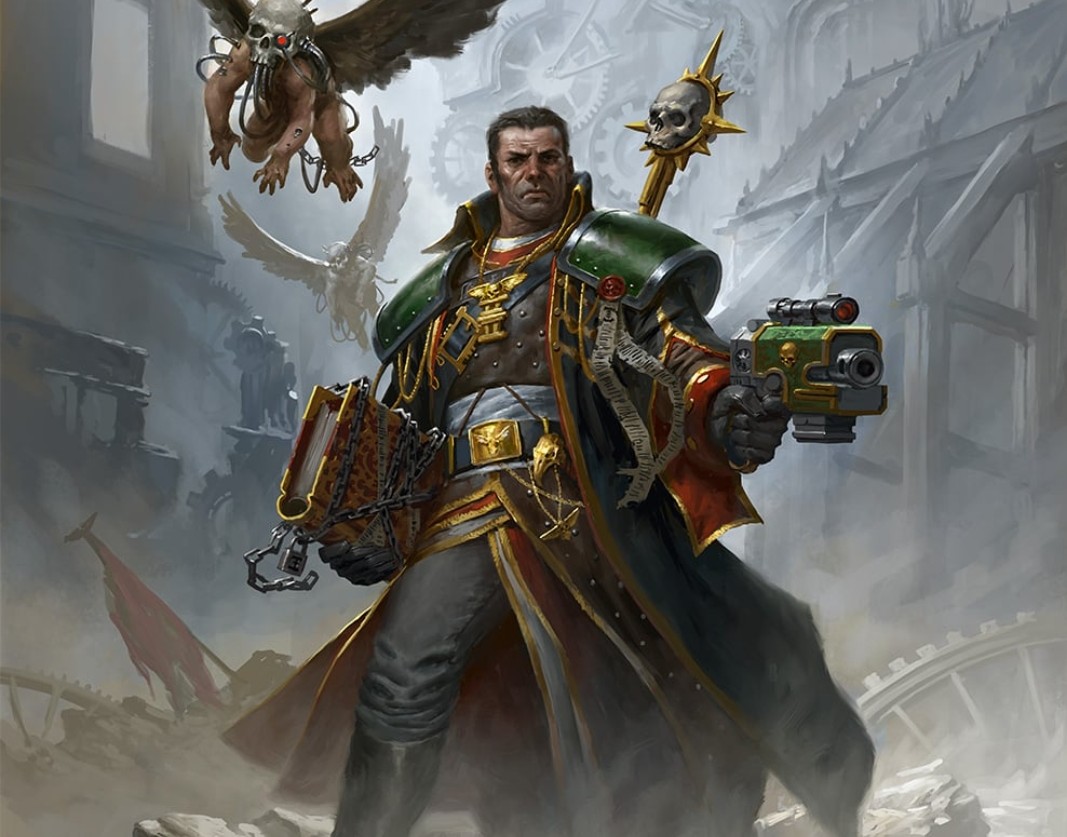
The Imperium is huge, slow and full of enemies hiding inside it. Inquisitors are there to find those enemies and stop them, whatever it takes. Each Inquisitor works mostly alone, with a small team of helpers called a retinue or warband. These helpers are often called Acolytes: soldiers, scholars, psykers, assassins, sometimes even reformed criminals. The most promising ones become Interrogators, apprentices who may one day become full Inquisitors themselves.
An Inquisitor carries a rosette or seal that gives them nearly unlimited authority. They can take command of Astra Militarum regiments, warships, planetary governors and, in some cases, even Space Marines (though a proud Chapter may push back). There is no boss handing out tasks. Each Inquisitor chooses their own targets, and their only real limit is other Inquisitors, who watch each other closely and sometimes hunt each other down.
Inquisitors do meet up in groups called conclaves to share information and plan, and very senior ones are known as Lord Inquisitors. The Inquisition also has a seat among the High Lords of Terra, the council that runs the Imperium, held by an official called the Inquisitorial Representative.
There is no official chain of command, so what really counts is reputation and influence. To make an Acolyte into a full Inquisitor you normally need the agreement of three Inquisitors or one Inquisitor Lord. If an Inquisitor is killed in the field, though, an Acolyte can pick up their seal and carry on in their place until another Inquisitor says otherwise.
When nothing else works, an Inquisitor can call Exterminatus: the complete destruction of all life on a world, usually by bombing it from orbit with terrible weapons. It is the Imperium's last answer to a planet lost to Chaos, aliens or plague.
The three great Ordos
The Inquisition is split into groups called Ordos. For its first 1,500 years or so it worked as a single, mostly secret order based on Titan. Then came the War of the Beast, a huge Ork invasion in the 32nd millennium, and the crisis pushed it to formally split into the Ordo Xenos and the Ordo Malleus. More Ordos followed later. Joining one is not even compulsory, and some Inquisitors never do. The three biggest are known as the Ordos Majoris:
- Ordo Malleus: the daemon hunters. They fight Chaos and the creatures of the Warp, and they also keep an eye on other Inquisitors who play with forbidden powers. Their fighting arm is the Grey Knights, a secret Chapter of psychic Space Marines.
- Ordo Hereticus: the witch hunters. They hunt heretics, rogue psykers, mutants and traitors inside the Imperium, even inside the Church. They often work with the Adepta Sororitas, the Sisters of Battle. This Ordo was founded later than the other two, after a dark time called the Age of Apostasy, when a mad leader named Goge Vandire took over both the Church and the government.
- Ordo Xenos: the alien hunters. They study and fight aliens, from Necrons to Tyranids. Their fighting arm is the Deathwatch, made of veteran Space Marines lent by many Chapters.
These fighting arms are called the Chambers Militant. Be aware that newer books tie them less tightly to their Ordos than older ones did, so you will see plenty of stories where an Inquisitor of one Ordo works with a different force.
There are also many smaller groups called Ordos Minoris, each with its own odd speciality. Their number is not known, and some of them are barely mentioned at all. One of the strangest is the Ordo Chronos, which cleans up time anomalies caused by Warp travel and is thought to have disappeared. Others include the Ordo Sepulturum (plagues, including the Zombie Plague), the Ordo Sicarius (keeping an eye on the Officio Assassinorum) and the Ordo Redactus, whose job is to keep the Inquisition's own history secret. Most stories focus on the big three.
Conclaves, fortresses and storm troopers
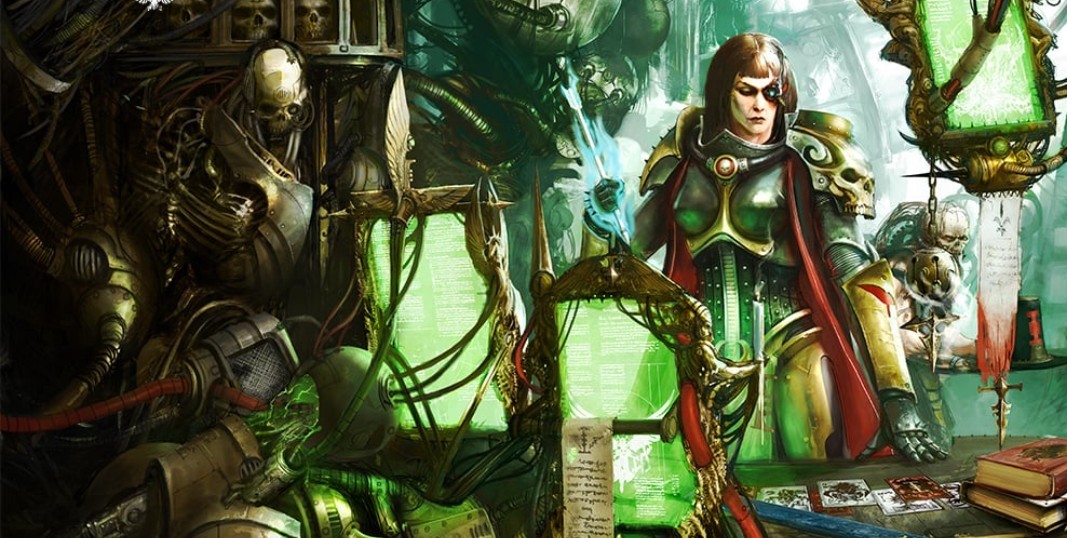
Inquisitors often belong to a regional conclave, a group that watches over a sector or even a whole Segmentum. A conclave is usually led by an Inquisitor Lord and can have its own ships, armies, fortresses and libraries. Smaller groups exist too: a cabal is a task force a conclave sets up for one particular problem, and a cell is an informal team of Inquisitors working toward a shared goal.
The Inquisition runs Inquisitorial Fortresses across the Imperium, full of cells, labs, armouries and archives. The one on Thracian Primaris had a permanent staff of 60,000. Closer to home, the moons of Saturn belong to the Ordo Malleus: Titan is the fortress-monastery of the Grey Knights, Mimas is a prison for the very worst prisoners, and Tethys holds a library of forbidden knowledge.
The Inquisition's own soldiers are the Inquisitorial Storm Troopers, who guard the fortresses and back up Inquisitors in the field. An Inquisitor can also borrow Imperial Navy ships. If a mission is secret enough, most of the crew are executed afterwards, and the ship goes back to the fleet under its old name. Even the Inquisition has watchdogs of its own: the Officio of Internal Prosecution looks for sloppy or heretical Inquisitors and puts them on trial.
Puritans and Radicals
Inquisitors do not all agree on how to protect humanity. The lore splits them, roughly, into two camps.
Puritans believe the old ways are best: destroy every heretic, every alien and every daemon, and never use the enemy's tools. Radicals believe the Imperium is too weak to win that way. Some study alien technology, some use daemon-bound weapons, some want to tear down and rebuild the Imperium's government, and some even try to bargain with the enemy. Inside these two camps there are smaller schools of thought with their own names, like the Xanthites (who want to turn Chaos against itself with things like daemon weapons) and the Recongregators (who want to rebuild the Imperium from the ground up).
Puritans see Radicals as dangerous heretics, and they often hunt them. Many of the best Inquisitor stories are about good people slowly drifting from one side to the other.
Famous Inquisitors
- Gregor Eisenhorn: the star of Dan Abnett's novels. He starts as a strict Puritan of the Ordo Xenos and, over many years, becomes far more radical than he ever planned.
- Gideon Ravenor: Eisenhorn's student. After terrible injuries in an attack, he lives sealed in a hover-chair and works almost entirely through his powerful psychic mind.
- Fidus Kryptman: the Ordo Xenos Inquisitor who first saw how dangerous the Tyranids were. His harsh tactics, including wiping out worlds in a Hive Fleet's path, got him declared a traitor by his own Inquisition. He is also blamed for pushing Tyranids into the huge Ork empire of Octarius, hoping the two would destroy each other.
- Torquemada Coteaz: a powerful Ordo Malleus Lord Inquisitor with a huge network of spies, often seen with his psyber-eagle.
- Katarinya Greyfax: a fierce Puritan of the Ordo Hereticus. During the fall of Cadia she joined Saint Celestine and Belisarius Cawl on the journey that ended with Guilliman's return.
- Kyria Draxus: an Ordo Xenos Inquisitor who appears on the tabletop today alongside Coteaz and Greyfax.
The Inquisition on the tabletop
Inquisitors and their helpers are part of the Imperial Agents army, which you can field on its own or add in small numbers to other Imperial armies. It covers the Inquisition and many other secret servants of the Imperium, like Assassins, the Adeptus Arbites and Navy boarding troops. The 10th edition Codex: Imperial Agents came out in 2024, with one named Inquisitor for each great Ordo: Coteaz, Greyfax and Draxus.
A good first model is Inquisitor Coteaz, who got a brand new plastic kit in 2024. For his helpers, the Inquisitorial Agents kit is great fun to build and paint, because every model is different.
Where to read more
- Eisenhorn: Xenos (Dan Abnett): the first Eisenhorn book and the classic Inquisitor story. It continues in Malleus and Hereticus.
- Ravenor (Dan Abnett): the follow-up series about Eisenhorn's student.
- Pariah (Dan Abnett): where the stories of Eisenhorn and Ravenor start to meet, through the eyes of a young woman.
- Codex: Imperial Agents: rules and background for Inquisitors and their allies.
- Inquisitor Coteaz: the 2024 plastic kit of the Ordo Malleus Lord Inquisitor.
FAQ
Who founded the Inquisition?
Nobody knows for sure. It was founded in the aftermath of the Horus Heresy, and the best-known story says Malcador the Sigillite gathered its first members on the Emperor's orders. Another story credits two of the Emperor's servants who stayed on Terra after his ascension. The truth is kept vague on purpose.
Who do Inquisitors answer to?
Officially, only to the Emperor. In practice, mostly to other Inquisitors and to their own judgement. Not even a High Lord of Terra can refuse an Inquisitor's order without good reason.
What is Exterminatus?
The order to destroy all life on a planet, used when a world is judged lost beyond saving.
What are the three main Ordos?
Ordo Malleus (daemons), Ordo Hereticus (heretics and witches) and Ordo Xenos (aliens).
What is the difference between a Puritan and a Radical?
Puritans refuse to use the enemy's tools. Radicals think the Imperium has to use any weapon it can, even forbidden ones.
Can I play an Inquisition army?
Yes. Inquisitors and their allies are fielded in the Imperial Agents army.
More lore: the Emperor of Mankind, the Horus Heresy, the Adeptus Custodes, the Tyranids, the Chaos Gods and Commissar Yarrick.
Lore summarised in our own words from Black Library novels, codexes and community wikis. Warhammer and all related names are trademarks of Games Workshop; WIZY is an independent fan site.
Sources
- Warhammer Community: Who Are the Three Named Inquisitors in Codex: Imperial Agents? warhammer-community.com
- Warhammer Community: Saturnine Lore Focus, Who Is Malcador the Sigillite? warhammer-community.com
- Warhammer Community: The Octarius Sector Is Hell and It's All Inquisitor Kryptman's Fault warhammer-community.com
- Lexicanum: Ordo Hereticus wh40k.lexicanum.com
- Lexicanum: Ordo Minoris wh40k.lexicanum.com
- Goonhammer: Codex Imperial Agents 10th Edition review goonhammer.com
Spot a mistake or know something we missed?
Tell us below. Only we see it, and we fix the page.