
We may earn a commission from links on this page.
The Necrons are the oldest army in the galaxy: an empire of skeletal metal warriors who were once a living people called the Necrontyr, gave up their flesh and their souls for immortality, and then slept for sixty million years in tombs beneath the stars. Now they are waking up, and they want their galaxy back. This page tells their story from the start, from a dying race under a cruel sun to the War in Heaven, the star gods who tricked them, and the great lords who rule the dynasties today.
Lore page, last updated November 15, 2026. Summarised in our own words from Necron codexes, campaign books, Black Library novels and community wikis. The Necrons were heavily rewritten in 2011, so older and newer lore do not always match, and some details are left deliberately vague by Games Workshop. Where the lore differs, we say so.
Necrons in 30 seconds
| What they are | An ancient race of undying robots, once the living Necrontyr |
| Age | Over sixty million years old |
| Greatest war | The War in Heaven against the Old Ones |
| Fallen allies | The C'tan, star-eating gods who fed on their souls |
| How they became metal | Biotransference: minds moved into bodies of living metal (necrodermis) |
| Home | Tomb worlds scattered across the galaxy |
| Rulers | Phaerons, overlords and lords of rival dynasties |
| Supreme ruler | Szarekh, the Silent King |
| Famous lords | Imotekh the Stormlord, Trazyn the Infinite, Anrakyr the Traveller |
| Famous crypteks | Orikan the Diviner, Illuminor Szeras |
| Known for | Getting back up, gauss weapons that strip targets atom by atom, and a deep contempt for younger races |
This page is the deep lore. If you want a quick overview of the army, how it plays on the tabletop and how to begin a collection, see our Necrons faction guide.
Who are the Necrons?
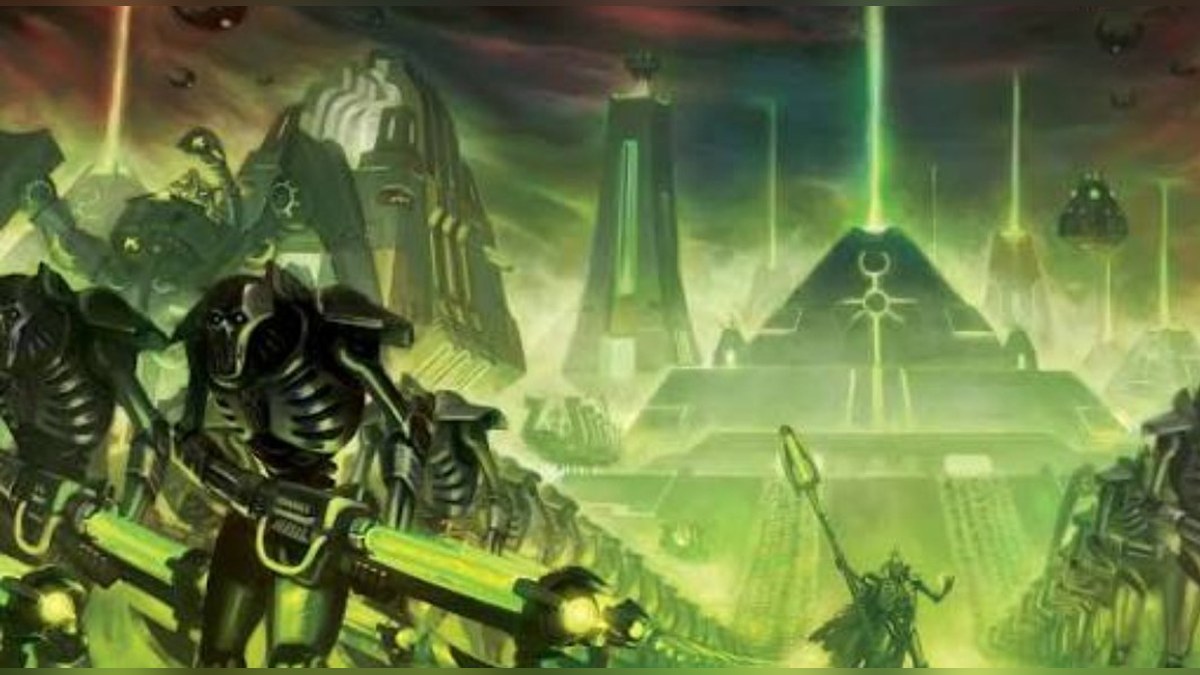
Picture an Egyptian tomb the size of a planet, full of silver soldiers standing in silent rows. Then picture the lights coming on. That is the Necrons in one image. They are machines now, but they remember being people. Their lords still scheme, boast, argue and hold grudges, while the common soldiers have lost almost all of their minds and simply march where they are told.
The key thing to understand is that the Necrons did not start out as robots. They chose this. Everything about them, their pride, their bitterness and their hunger to rule again, comes from a long story of bad deals, betrayal and loss. So let's start at the beginning.
The Necrontyr: a cursed, short-lived people
Long before humans, long before the Aeldari, there were the Necrontyr. They lived on a world scorched by a fierce, unstable star that poured radiation onto everything. Their bodies were frail, their lives were short and painful, and sickness was a constant part of life. Death was always close, so their whole culture was built around it. They built great tombs and necropolises, and in many ways cared more for the dead than for the living.
The Necrontyr spread out across the stars and built a large empire, ruled by a class of nobles and kings. At the top sat the Triarch, a council of three rulers: the Silent King and two high-ranking phaerons, with the Silent King as its lord. Its agents, the Triarch Praetorians, made sure the lesser dynasties did as they were told. The empire had huge science, and its scientists and priests, later called crypteks, were masters of strange technologies.
But the empire was not stable. Its many dynasties quarrelled constantly, and whole regions rose up to break away in a string of rebellions known as the First Wars of Secession. And the Necrontyr carried a deep, poisonous envy.
The Old Ones and the War in Heaven
The galaxy back then was watched over by the Old Ones, an ancient and powerful race who shaped worlds and seeded life across the stars. The Old Ones were very long-lived. To the Necrontyr, dying young under their cruel sun, this was unbearable. They asked the Old Ones for the secret of long life. In most tellings, the Old Ones refused, or simply could not help.
Refused, the Necrontyr grew bitter. Their envy turned to hatred, and their rulers saw a second use for it: a common enemy could hold the quarrelling dynasties together. So the Necrontyr started a war with the Old Ones, the rebels dropped their rebellion to join in, and this vast conflict became known as the War in Heaven.
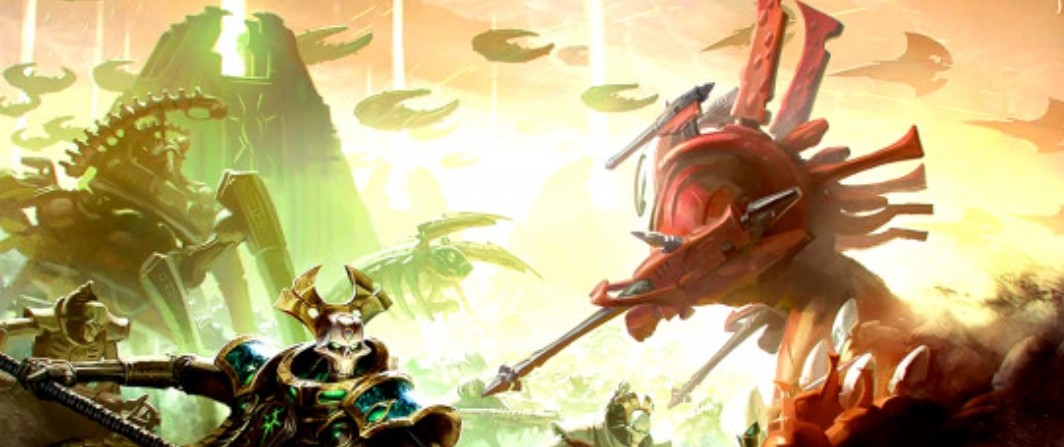
It went badly. The Old Ones were masters of the warp, the realm of psychic energy behind reality, and the Necrontyr were not. The Old Ones could step across the galaxy through the webway, and the Necrontyr were pushed back again and again. Within a few centuries they had been beaten back to the dim halo stars at the edge of the galaxy, barely hanging on. Their empire also started to tear itself apart again, in what became the Second Wars of Secession.
The C'tan: gods made of starlight
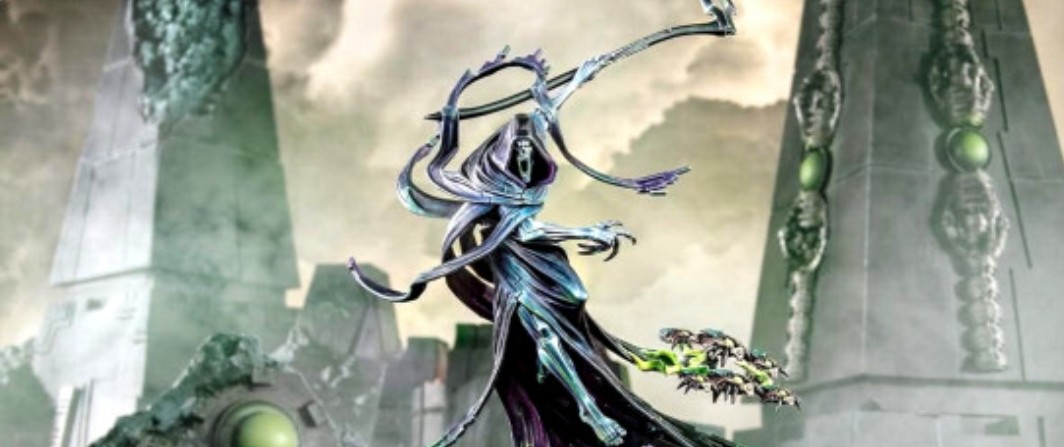
Then the Necrontyr found something new. Out in the void lived the C'tan, enormous beings of energy who fed on the power of stars. They were ancient and vast, but they had no real bodies and little understanding of the physical world. In the story of the Necrons, the C'tan are the snake in the garden.
The Necrontyr, led at this point by Szarekh, the last Silent King, built bodies for the C'tan out of necrodermis, a strange living metal. Wearing those bodies, the C'tan could finally act in the material world, and they became something like gods. They claimed they too hated the Old Ones, and they offered the Necrontyr everything they wanted: victory in the war, and eternal life.
The pitch was made by the C'tan known as the Deceiver, who met Szarekh in person and said the gift was free, from one ally to another. Szarekh's court argued about it for a whole year. Only one voice spoke against it: the court astrologer, Orikan the Diviner. Szarekh brushed his warnings aside, because he wanted immortality and a united people too badly to say no.
Each C'tan had its own nature and title. A few of the best known are the Nightbringer (Aza'gorod), an embodiment of death whose shape, some lore suggests, haunts the nightmares of many younger races; the Deceiver (Mephet'ran), a trickster and liar; the Void Dragon (Mag'ladroth), a being of fire and machines that many hints place, imprisoned, beneath Mars; and the Outsider, a C'tan driven mad. Their exact fates are different in older and newer lore, and some are left unclear on purpose.
Biotransference: the great betrayal
To fight beside their new gods forever, the Necrontyr needed bodies that would never age or sicken. The C'tan offered the answer: biotransference. Each Necrontyr's mind would be moved out of its weak, dying flesh and into a body of necrodermis that could last forever.
The C'tan supplied the knowledge, but a cryptek named Szeras is credited with making the process real. Szarekh agreed, and the whole race went through it. Huge biotransference furnaces burned day and night. The flesh of the Necrontyr was gone, and in its place stood the Necrons.
But there was a hidden cost. As the Necrontyr were transferred, the C'tan feasted on the life force that was released, and their victims lost their souls. What came out of the furnaces were cold, emotionless machines. The nobles kept most of their minds and personalities, but the ordinary Necrontyr were reduced to near-mindless soldiers, obeying orders through control protocols built into them. The Necrons had been turned into slaves of the very gods who promised to save them.
Szarekh understood what had happened to his people. He could do nothing yet. The C'tan were too strong. So he waited.
Victory, and revenge on the C'tan
With the C'tan and their tireless metal armies, the war turned. Stars were snuffed out and whole systems were swallowed by black holes. With the help of a C'tan called Nyadra'zatha, the Necrons even broke into the webway and attacked the Old Ones in their own strongholds. In desperation the Old Ones seeded worlds with new races tied closely to the warp, among them the ancestors of the Aeldari, the Orks, the Jokaero and others. That worked for a while, since warp energy hurt the C'tan, but it also stirred up terrible predators in the warp itself. Between those horrors and the Enslaver Plague, the Old Ones' network fell apart. They were scattered and their power was broken for good.
But the war had a twist. The Old Ones' successors, the Aeldari, still held power through their mastery of the warp, and the Necrons had won a ruined galaxy. And now Szarekh struck.
The C'tan had grown careless and weakened by the long struggle. Szarekh turned the whole Necron empire against its masters, focusing the raw energy of the universe into weapons even a C'tan could not survive. The Necrons could not kill the C'tan outright, since they were essentially star gods, but they did the next best thing. They shattered them into countless fragments and locked those C'tan Shards away in prisons called tesseract labyrinths. Today, Necron lords can unleash a captured Shard on the battlefield as a living weapon, a god forced to fight for its former slaves.
The revolt did not come free. One C'tan, Llandu'gor the Flayer, was destroyed completely (legend says by the Maynarkh Dynasty, on the Silent King's orders), but as it died it left behind a curse that would haunt the Necrons for millions of years. We will come back to that below.
The Great Sleep
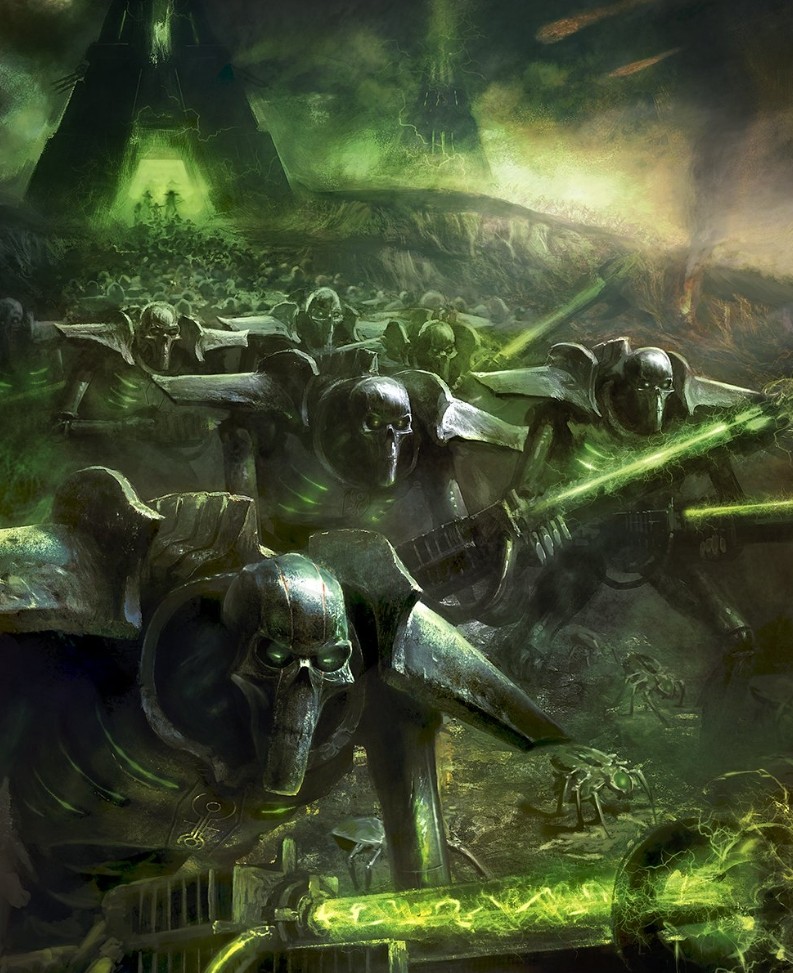
Even after beating the C'tan, the Necrons were in a hard place. The Aeldari empire was rising and was too strong for them to beat at that moment, and their own numbers were not endless. So Szarekh made a long-term plan: the Necrons would hide and wait. They would retreat into stasis-tombs across the galaxy, sleep until the young races had burned themselves out, and then wake up to take everything back.
This was the Great Sleep, and it lasted around sixty million years. Whole planets became tomb worlds, their surfaces hiding vast underground cities full of sleeping soldiers.
Before the sleep began, Szarekh did one more thing. Full of guilt for what he had done to his people, he released them from the control protocols that bound them to his will, and then he went into exile. The Necron nobles were free to choose their own path. The Silent King left the galaxy behind as a kind of penance, wandering the empty void between galaxies. Out there, the newer lore says, he came across the Tyranid Hive Fleets heading for the Milky Way, and that discovery is a big part of why he eventually came back.
What went wrong
The plan did not go perfectly. Sixty million years is a very long time:
- Tomb worlds broke down. Many were damaged, destroyed or simply lost, and some were wrecked by raiding Aeldari. Millions, maybe billions, of sleeping Necrons were lost this way. Some tombs never woke up at all.
- Minds decayed. Many Necrons woke damaged in body and mind. Some lords became paranoid, some lost touch with reality, and some even believe they are still alive and made of flesh.
- The galaxy moved on. When the Necrons began to wake, they found it full of humans, Orks, Aeldari and others living on their old worlds, often digging into their tombs and setting off the wake-up process by accident.
The awakening and the dynasties
Not every tomb woke on time. Some stirred during the Great Crusade, others during the Age of Apostasy, and these early risers set up the Awakened Council to settle arguments between dynasties until the Silent King could be found. Most, though, woke in the late years of the 41st millennium, and billions are still asleep. The Imperium's first reported clash with them was a raid on Sanctuary 101 in 897.M41, where the attackers seemed to rise straight out of the ground. Together the waking dynasties call their realm the Infinite Empire, and the worlds they have already taken back cover around a quarter of the space the Imperium does. Each was ruled by its own lords and loyal to one of the old dynasties, the great royal houses of the Necron empire. These dynasties do not work as one army. Some rebuild their old kingdoms, some go to war with each other, and some just want to be left alone.
The best known dynasties include:
- Sautekh: widely seen as the most powerful dynasty, partly because it came out of the Great Sleep almost entirely intact. It is ruled by Imotekh the Stormlord and is the one most players know.
- Nihilakh: a proud, inward-looking dynasty that hoards treasures and knowledge and mostly wants to be left alone. Trazyn the Infinite belongs to it.
- Mephrit: furious, warlike Necrons who love burning their enemies away with solar weapons.
- Novokh: a dynasty that remembers its warrior past and fights with violent passion.
- Nephrekh: golden-skinned Necrons whose bodies can turn into light.
- Szarekhan: the Silent King's own dynasty, which with its allies backs his plan for Necron rule of the galaxy.
- Maynarkh: one of the most violent dynasties, which wants to wipe out all organic life.
New and returning players can start with a Necrons Combat Patrol and pick any of these dynasties for their colour scheme.
Famous Necron characters
Imotekh the Stormlord
Imotekh is the phaeron of the Sautekh Dynasty and perhaps the greatest Necron general alive. Before the Great Sleep he was a nemesor, a war leader rather than a king. The Sautekh phaeron was one of the few rulers who did not survive the sleep, and the crownworld of Mandragora fell into a squabble between would-be heirs. One of them woke Imotekh to win the fight for him. Imotekh crushed the rivals instead and took the throne for himself. Since then he has brought dozens of tomb worlds under his rule, making Sautekh the largest Necron empire of the modern age.
Imotekh is known for calling up great lightning storms over his battlefields, and for a cold, careful mind that treats war like a puzzle. He is also extremely proud, and wants nothing less than to rebuild the old Necron empire with himself at its head. Unsurprisingly, he is not happy that the Silent King has returned to claim the crown. Imotekh also sees the Necrons' metal bodies as an upgrade, not a curse, so he has no interest in going back to flesh. Recent lore has him in open revolt against Szarekh's authority during the War in the Pariah Nexus, with the Sautekh and their allies fighting the Szarekhan and theirs in a Necron civil war, though how this rivalry plays out is still being written.
Trazyn the Infinite
Trazyn is the fan favourite. An overlord of the Nihilakh Dynasty who rules the tomb world of Solemnace, he is an obsessive collector of history. He steals artefacts, relics and sometimes living people from across the galaxy, freezes them in stasis and puts them on display in his vast museum, the Prismatic Galleries.
Trazyn's nickname comes from a neat trick: when his body is destroyed, he can send his mind into another Necron body nearby, so he is very hard to get rid of. He is vain, chatty and funny, and his long, petty rivalry with Orikan is a highlight of Necron lore. Read The Infinite and the Divine by Robert Rath for the best telling of it.
Orikan the Diviner
Orikan is a cryptek of the Sautekh Dynasty and a master astromancer, someone who reads the future in the stars. He serves as one of Imotekh's most valuable advisors, using his predictions to plan the Stormlord's campaigns. But Orikan has his own agenda. He is also old enough to have been the court astrologer who warned Szarekh against trusting the C'tan, and nobody listened. He can bend time, and many hints in the lore suggest he is quietly working toward some great destiny of his own. He and Trazyn have spent ages trying to outwit each other.
Szarekh, the Silent King
Szarekh is the last Silent King, the ruler who led his people into the War in Heaven, agreed to biotransference, broke the C'tan and set the Great Sleep in motion. After his long exile, he has come back. In 744.M41, after running into the Tyranids out in the void between galaxies, he came back. At first he travelled quietly with a band of loyal Triarch Praetorians, hiding who he really was and nudging lords and crypteks from the shadows to wake slumbering tomb worlds and unite them against the Tyranids. He also has the Triarch and his bodyguards, the Triarchal Menhirs, at his side as he takes charge of his people again.
His most important goal is surprising. Szarekh wants to undo biotransference: to find a way to give the Necrons living bodies again. It is his way of making up for his greatest mistake. In the meantime, he is gathering the dynasties back under his rule, by persuasion or by force. You can build him with the Szarekh, the Silent King kit, one of the most impressive models in the range.
Illuminor Szeras
Szeras is the cryptek behind biotransference itself. Where the C'tan gave the secret, Szeras made it work. He saw the process as a step toward perfection, not a curse, and he has spent millions of years trying to understand and improve on life by taking living things apart in his laboratories. He is curious, cold and cruel. Now he works with the Silent King on the project to reverse biotransference, though it is fair to ask how much Szeras cares about saving his people versus satisfying his own curiosity.
Anrakyr the Traveller
Anrakyr is an overlord of the Pyrrhian Eternals, and one of the few Necron lords who truly believes in uniting the dynasties. After he woke, he set off across the galaxy to wake other tomb worlds and rally them into a new empire. In 999.M41 he even made a desperate alliance with Dante and the Blood Angels to stop Hive Fleet Leviathan. He is a proud, honourable warrior who hates the younger races for desecrating Necron worlds, and he can seize enemy war machines with his mind and turn their guns on their own side.
The Flayed Ones and other horrors
Remember Llandu'gor the Flayer? When it was destroyed, it left a curse, often called the flayer virus, in the minds of the Necrons. Those who catch it develop an endless hunger for the flesh they lost. They kill living things, peel off their skin and wear it, in a sad, terrible attempt to feel alive again. These are the Flayed Ones.
Other Necrons are disgusted by them and see them as diseased outcasts. They lurk on the edges of battles and seem to appear out of nowhere to butcher anyone nearby. The curse spreads by contact, and a few lords, known as Flayer Kings, carry it while keeping more of their minds than the rest. In 989.M41 the Agdagath Dynasty simply gave up the world of Tyr after Flayed Ones overran it. They are one of the creepiest things in 40K, and a reminder that the Necron bargain came with a very high price.
Flayed Ones are not the only Necrons who have gone wrong. Others, the Destroyer Cults, have come to hate all life and want only to wipe it out. Their lords tolerate them because they are useful in battle, but they are just as broken as the Flayed Ones in their own way.
The Necrons now
Today the Necrons are one of the great powers of the galaxy, but they are not united. The opening of the Great Rift, which split the galaxy in two and flooded it with warp energy, is a disaster for every race. For the Necrons, who have little to do with the warp, it is also a threat to their whole plan.
The Silent King's return has pushed them toward a new direction. After the Great Rift opened, Szarekh sped up his plans by creating the Pariah Nexus. In that region, Necron pylons built from a strange material called blackstone drain the warp from the area. Humans there have reported losing hope, faith and will in a slow, chilling effect the Imperium calls the Stilling. The Silent King's own Szarekhan Dynasty is at the heart of the fighting there. Szeras is closely tied to the pylons, though the Silent King is the one who set the whole project in motion. Blackstone is not new, either: it is the same warp-blocking material that was in the Cadian Pylons, which held back the Eye of Terror for so long. The Nexus has drawn the Imperium into a long, bitter crusade to break it. Necron lords disagree about what to do with the galaxy and with Szarekh, and the dynasties still fight each other as much as anyone else.
The core of the story is the same as always: an ancient race that gave up everything for eternal life, and is now trying to decide what that life is for. If you want to explore it further on the tabletop, a Codex: Necrons is the best place to read their current lore in full.
FAQ
Are the Necrons robots?
Yes and no. Their bodies are made of living metal, but each Necron was once a living Necrontyr whose mind was moved into that body. The nobles kept their personalities, while the rank and file lost most of theirs.
Who are the C'tan?
Star-eating beings of energy who offered the Necrontyr eternal life, then fed on their souls during biotransference. The Necrons later turned on them and broke them into Shards.
How long did the Necrons sleep?
Around sixty million years, in tomb worlds spread across the galaxy. Many tombs failed, and many Necrons woke damaged in body or mind.
Who is the Silent King?
Szarekh, the last ruler of the old Necrontyr empire. He went into exile after the war, but returned in 744.M41 after meeting the Tyranids in the void, and is now uniting his people against them and trying to undo biotransference.
What are Flayed Ones?
Necrons infected by the curse of the C'tan Llandu'gor the Flayer. They crave flesh and wear the skins of their victims, and other Necrons shun them.
Who is the most famous Necron?
Imotekh the Stormlord is the most powerful phaeron of the modern age, but Trazyn the Infinite, the collector of the Prismatic Galleries, is probably the best loved among fans.
Lore summarised in our own words from Black Library novels, codexes and community wikis. Warhammer and all related names are trademarks of Games Workshop; WIZY is an independent fan site.
Sources
- Lexicanum: Imotekh the Stormlord wh40k.lexicanum.com
- Lexicanum: War in the Pariah Nexus wh40k.lexicanum.com
- Warhammer Community: Welcome Your New Necron Overlords warhammer-community.com
- Goonhammer: The Lore of Codex Necrons 9th Edition goonhammer.com
- Bell of Lost Souls: Szarekh, the Silent King belloflostsouls.net
- Warhammer 40k Wiki: Szeras warhammer40k.fandom.com
- Warhammer Community: What is Biotransference? warhammer-community.com
- Warhammer Community: Ancient Dynasties of the Necrons warhammer-community.com
Spot a mistake or know something we missed?
Tell us below. Only we see it, and we fix the page.