
We may earn a commission from links on this page.
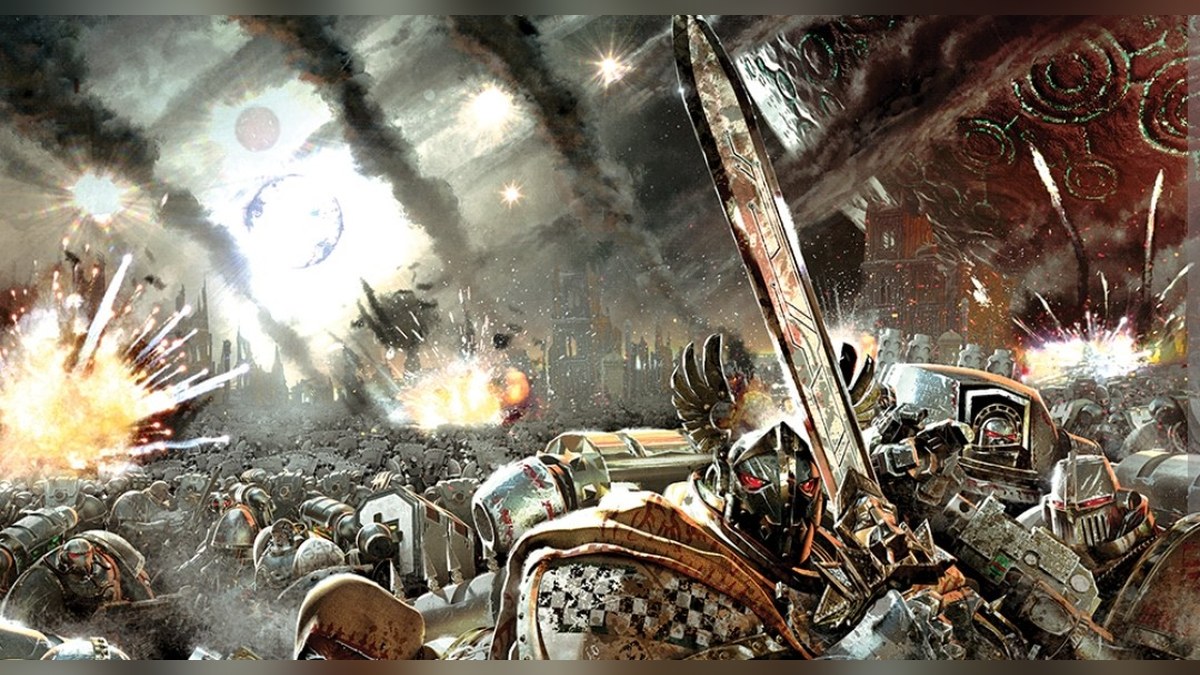
Before there were a thousand Space Marine Chapters, there were twenty Legions: huge armies of tens of thousands of warriors, each built from the gene-seed of one Primarch and numbered I to XX. Nine of them stayed loyal to the Emperor during the Horus Heresy, nine turned traitor, and two were wiped from the records so completely that nobody even knows their names. Everything you see on the tabletop today, from the Ultramarines and Dark Angels to the Black Legion and Death Guard, grows out of those twenty Legions. This page explains them one by one, then shows how they were broken up into the Chapters of the 41st Millennium.
Lore page, last updated November 15, 2026. Summarised in our own words from codexes, Horus Heresy books, Black Library novels and community wikis. Some details, like the exact Legion homeworlds and the date of the Second Founding, are described a little differently in different books. Where the lore differs, we say so.
The 20 Legions at a glance
Here is every Legion in number order. For the life story of each gene-father, see our guide to all 20 Primarchs or click a name in the table.
| No. | Legion | Primarch | Homeworld | Side | After the Heresy |
|---|---|---|---|---|---|
| I | Dark Angels | Lion El'Jonson | Caliban (destroyed) | Loyal | Split into the Unforgiven Chapters: Dark Angels and their successors, forever hunting the Fallen |
| II | Unknown | Unknown | Unknown | Lost | Erased from Imperial records long before the Heresy |
| III | Emperor's Children | Fulgrim | Chemos | Traitor | Chaos Legion of Slaanesh, broken into warbands of excess-seekers |
| IV | Iron Warriors | Perturabo | Olympia | Traitor | Chaos Legion of siege-masters, ruling from the daemon world Medrengard |
| V | White Scars | Jaghatai Khan | Chogoris | Loyal | White Scars Chapter and a group of successor Chapters |
| VI | Space Wolves | Leman Russ | Fenris | Loyal | Stayed one oversized, non-Codex Chapter, the Space Wolves |
| VII | Imperial Fists | Rogal Dorn | Terra (in practice the fortress Phalanx; Dorn was found on Inwit) | Loyal | Imperial Fists, Black Templars, Crimson Fists and other successors |
| VIII | Night Lords | Konrad Curze | Nostramo (destroyed) | Traitor | Chaos raiders and terror warbands |
| IX | Blood Angels | Sanguinius | Baal | Loyal | Blood Angels, Flesh Tearers and the other Sons of Sanguinius |
| X | Iron Hands | Ferrus Manus | Medusa | Loyal | Iron Hands and a handful of machine-minded successors |
| XI | Unknown | Unknown | Unknown | Lost | Erased from Imperial records long before the Heresy |
| XII | World Eaters | Angron | Bodt (Angron came from Nuceria) | Traitor | Khorne-worshipping berserker warbands, now gathered again behind daemon Angron |
| XIII | Ultramarines | Roboute Guilliman | Macragge | Loyal | Ultramarines and more successor Chapters than any other Legion |
| XIV | Death Guard | Mortarion | Barbarus | Traitor | Chaos Legion of Nurgle, the Plague Marines |
| XV | Thousand Sons | Magnus the Red | Prospero (destroyed) | Traitor | Chaos Legion of Tzeentch, most turned to dust by the Rubric of Ahriman |
| XVI | Luna Wolves, then Sons of Horus | Horus Lupercal | Cthonia | Traitor | Reborn as the Black Legion under Abaddon the Despoiler |
| XVII | Word Bearers | Lorgar Aurelian | Colchis | Traitor | Chaos Legion of fanatic priests, worshipping the gods as a whole |
| XVIII | Salamanders | Vulkan | Nocturne | Loyal | Stayed a single small Chapter with very few successors |
| XIX | Raven Guard | Corvus Corax | Deliverance | Loyal | Raven Guard and a few stealthy successors |
| XX | Alpha Legion | Alpharius Omegon | Unknown (deliberately hidden) | Traitor | Secretive Chaos cells and cults hidden all over the Imperium |
What was a Space Marine Legion?
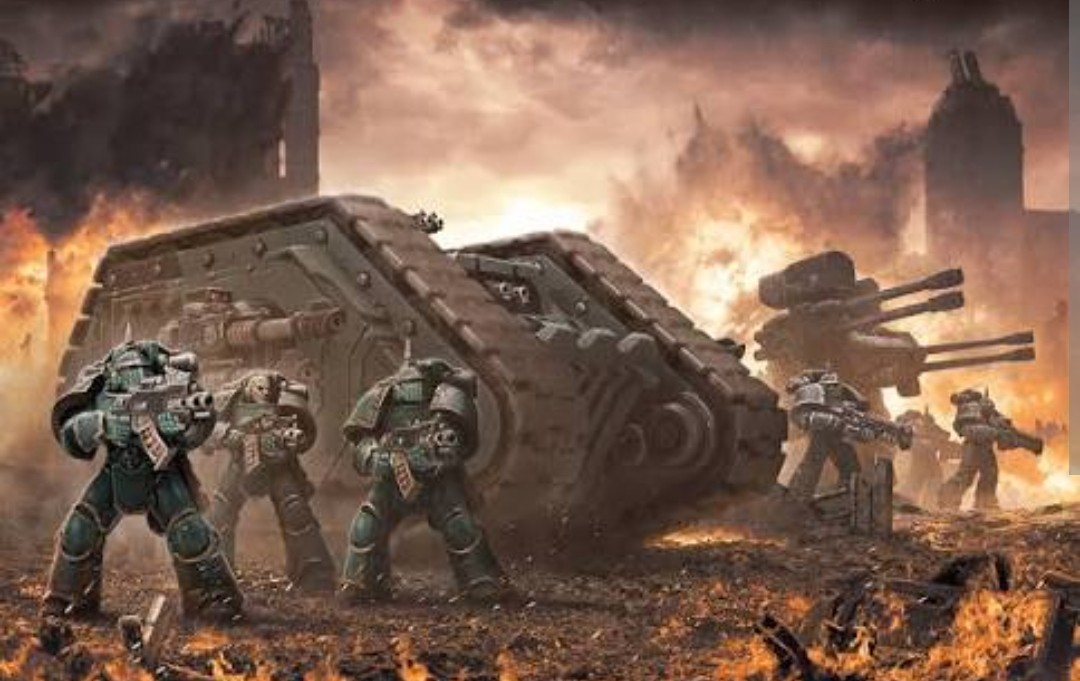
Before the Great Crusade, the Emperor needed armies that could conquer the galaxy. He made the Primarchs, twenty super-human generals, and from their genetic code he created the Space Marines, or Legiones Astartes. The first Legions were made in the last days of the Unification Wars on Terra, replacing the older and less stable Thunder Warriors, and they were ready to lead the Crusade from day one. Each Legion was made with gene-seed from one Primarch, so its warriors shared his looks, his strengths and often his flaws.
The Primarchs were scattered across the galaxy as babies, so for many years the Legions fought without them. Each was known only by its number from I to XX and wore plain grey armour. When a Primarch was found, he took command of the Legion that carried his blood, and the Legion usually took a proper name, adopted his homeworld as its own and repainted its armour in new colours. Some Legions changed their name when that happened: the War Hounds became the World Eaters, and the Luna Wolves later became the Sons of Horus.
The important thing to grasp is the size. A Legion was not a regiment, it was an army. Most counted tens of thousands of Space Marines, and the biggest ran past a hundred thousand, with their own fleets, support troops and worlds. The Ultramarines were the largest Legion of all at the time of the Heresy. Books give rough figures for a few others: around 100,000 Imperial Fists, 100,000 to 150,000 Word Bearers, and anywhere from 90,000 to 180,000 for the Alpha Legion, which fits a Legion nobody could ever count properly. Older background from the 1990s talked about Legions of roughly 10,000 Marines, so you will see much smaller numbers in early books. That much power under one Primarch is exactly what made the Horus Heresy so devastating, and it is why the Legions were broken up afterwards.
How a Legion was organised
On paper, a Legion was built like a pyramid. The Primarch sat at the top with his command staff. Below him came Chapters, each led by a Lord Commander, then Battalions, then Companies of about 100 Legionaries, and finally Squads. The standard plan said a Chapter should have two Battalions of five Companies each, with the first Company made of veterans and the last of specialists. This plan came from an old Terran book of war called the Principia Belicosa.
In practice almost nobody stuck to it. Legions grew and shrank with every campaign, and many dropped the old terms to suit their Primarch's style of war. One World Eaters Chapter at the Battle of Beta-Garmon had about 5,000 warriors, five times the size of a standard one. Some Legions were tiny for a long time: the Thousand Sons suffered from mutations and wild psychic powers, and most of Fulgrim's gene-samples were lost, so the Emperor's Children were very small. Both only grew to a proper size after their Primarchs were found.
The two lost Legions: II and XI
Every list of the Legions has two holes in it. The II and XI Legions, and their Primarchs, were struck from every Imperial record long before Horus rebelled. Their names, colours and fates are a mystery, and Games Workshop has kept it that way on purpose for decades.
The few hints in the lore suggest that something terrible happened to them, and that the other Primarchs swore an oath never to speak their lost brothers' names. In The First Heretic, Lorgar is said to have grieved deeply for them, and some Word Bearers whisper that their surviving warriors were folded into the Ultramarines. Very old lore (the 2nd edition Ultramarines codex) took a different line and guessed the II and XI may have fought for Horus at the start of the Heresy, but newer books say both were gone well before it began. Some Horus Heresy books drop small clues, and fans have spent years guessing, but there is no official answer. If anyone ever tells you what the lost Legions "really" were, they are sharing a fan theory, not canon.
The Horus Heresy: loyal and traitor
When the Warmaster Horus turned against the Emperor, the Legions split. Nine Legions sided with Horus and fell to Chaos: the Emperor's Children, Iron Warriors, Night Lords, World Eaters, Death Guard, Thousand Sons, Sons of Horus, Word Bearers and Alpha Legion. Nine stayed loyal: the Dark Angels, White Scars, Space Wolves, Imperial Fists, Blood Angels, Iron Hands, Ultramarines, Salamanders and Raven Guard.
It was never as clean as that list suggests. Some loyal Legions had traitors inside them, and some traitor Legions had warriors who refused to turn. The Thousand Sons only ended up with Horus after the Space Wolves burned their homeworld. The Alpha Legion even claimed it sided with Horus for its own secret reasons, and nobody has ever been quite sure what they truly wanted. The Dark Angels are a puzzle too: what they really did during the Heresy is known only to the Dark Angels themselves. Our Primarchs overview covers who chose what, and why.
After the Heresy: the Codex Astartes
The war ended with Horus dead and the Emperor on the Golden Throne. Roboute Guilliman, Primarch of the Ultramarines, made sure nothing like it could happen again. He wrote the Codex Astartes, a huge book on how Space Marines should be organised, how they should fight and how they should be led.
Its most famous rule is simple: no single commander should ever control a Legion again. Each Legion was to be split into Chapters of about 1,000 Space Marines, usually ten companies of a hundred each. A Chapter is self-sufficient, with its own fleet and fortress-monastery, but it is far too small to threaten the Imperium alone. The Codex also covers everything from battle tactics to the markings on a Marine's shoulder pad, which is why Codex-following Chapters look so much alike.
Not everyone was happy. Some Primarchs, notably Leman Russ of the Space Wolves and Rogal Dorn of the Imperial Fists, resisted the idea, and the arguments over the Codex nearly turned into another civil war. In the end the Codex won, though a few Chapters still follow it only loosely to this day.
The Second Founding
The breaking of the Legions is called the Second Founding. It happened a few years after the end of the Heresy (books usually place it about seven years later). Looking back, the original twenty Legions are counted as the First Founding. One Chapter kept the Legion's name, homeworld, traditions and identity, and the rest of its warriors were formed into new Chapters with new names, colours and homeworlds. These new Chapters are called Successor Chapters, and the Chapter that kept the old name is their Founding Chapter. Strictly speaking, only Second Founding Chapters get the Successor title; Chapters made in later Foundings are just descendants of a Legion's gene-seed. The one big exception is the Grey Knights, created in secret shortly before the Second Founding from gene-seed of unknown origin.
Each loyal Legion handled it differently:
- Ultramarines: Guilliman's Legion was the largest, so it produced the most successors by far. Chapters like the Novamarines, the Genesis Chapter and the Aurora Chapter come from this Founding, along with the Black Consuls, Doom Eagles, Silver Skulls and White Consuls. An old Imperial text, the Apocrypha of Skaros, says twenty-three Chapters were made from the Ultramarines at this Founding alone, though it names none of them. Today nearly three-fifths of all Chapters carry Ultramarines blood. More about them in our Ultramarines guide.
- Dark Angels: the First Legion became the Unforgiven, the Dark Angels plus Chapters such as the Angels of Absolution, Angels of Redemption and Angels of Vengeance. They share a dark secret, the Fallen Angels who betrayed the Lion, and they hunt them in silence across the stars.
- Imperial Fists: older books say Rogal Dorn's Legion split into three Chapters: the Imperial Fists, the Black Templars and the Crimson Fists. Newer sources add more Second Founding sons, such as the Excoriators, Fists Exemplar and the renegade Soul Drinkers.
- Blood Angels: the Sons of Sanguinius include the Flesh Tearers, the Angels Encarmine, the Angels Sanguine, the Angels Vermillion and the Blood Drinkers, all of them carrying the Red Thirst and the Black Rage.
- White Scars, Iron Hands and Raven Guard: each became a Chapter of the same name and a smaller family of successors.
- Space Wolves: still one large Chapter that follows its own traditions instead of the Codex. They did give up warriors for one successor, the Wolf Brothers, but that Chapter's gene-seed mutated badly and it was later disbanded. The Space Wolves have had no lasting successors since.
- Salamanders: the Legion was so badly hurt at Isstvan V that it became a single small Chapter. Older books say it had no official successors at all, though Imperial scholars have spotted Salamander-like habits in Chapters such as the Black Dragons and Storm Giants.
There have been many Foundings since, each creating new Chapters from old gene-seed. Most are numbered, and some, like the infamous 21st or "Cursed" Founding, are remembered for going badly wrong. Some Chapters do not even know which Founding they came from.
The traitor Legions today
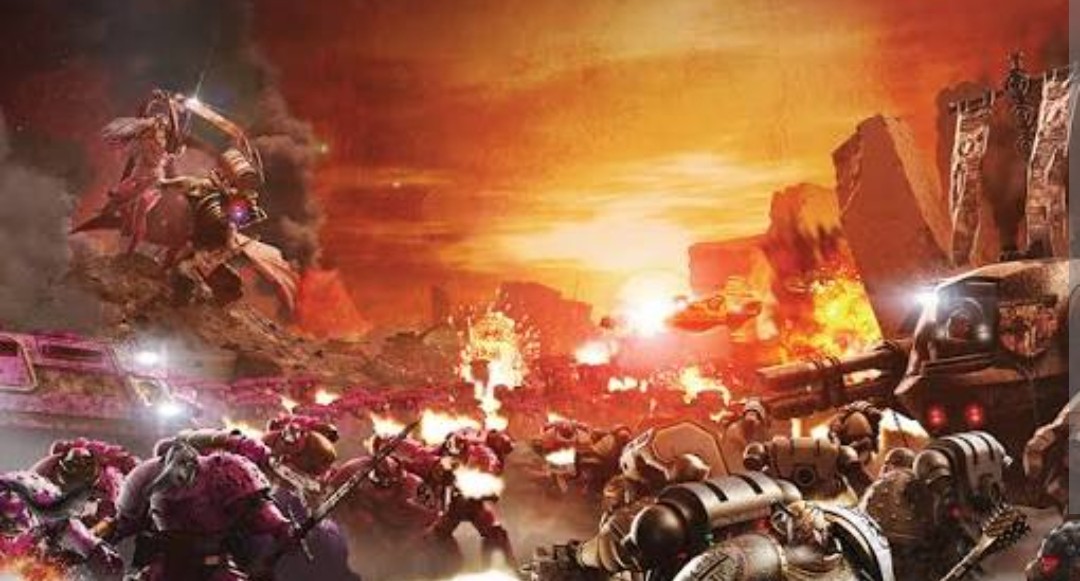
The traitor Legions were never split by the Codex. After the Heresy they fled into the Eye of Terror, a region where the warp spills into real space. There, time runs strangely, and many of the original traitors from ten thousand years ago are still alive.
Most traitor Legions have fallen apart into warbands, independent bands of Chaos Space Marines following their own lords. Some, however, are tied so closely to one Chaos God that they still fight as recognisable Legions:
- Death Guard: the plague-ridden servants of Nurgle, led by Mortarion, now a Daemon Prince.
- Thousand Sons: sorcerers of Tzeentch. Most of their warriors were turned into dust-filled suits of armour, the Rubric Marines, by a spell meant to save them.
- World Eaters: berserkers of Khorne. Long scattered into warbands, they have been drawn together again in recent lore behind Angron.
- Emperor's Children: warriors of Slaanesh, chasing perfection and pleasure, famous for their Noise Marines.
The Sons of Horus had the strangest fate. After losing their Primarch, they were hunted and broken by the other traitors, until Horus's old first captain, Abaddon, rebuilt them as the Black Legion. Abaddon's Black Legion is the largest Chaos force in the galaxy, and it has launched thirteen Black Crusades against the Imperium. The Iron Warriors, Word Bearers and Alpha Legion are not bound to one god, each with its own style: siege warfare, religious zeal for all the gods together, and secret infiltration. The Night Lords are the odd ones out. Most of them sneer at worship of any kind, Chaos included, and they fight to spread terror rather than to please a god.
Famous Chapters every new fan should know
Black Templars
The Black Templars are Imperial Fists successors, said to have been founded by Sigismund, Rogal Dorn's champion. They are a crusading Chapter that worships the Emperor as a god, which most Space Marines do not, and they never stay in one place. They do not follow the Codex strictly, and they are generally believed to have far more than 1,000 warriors spread across many crusade fleets. Their knights and loud zeal make them one of the most popular Chapters in the game.
Crimson Fists
Another Imperial Fists successor, the Crimson Fists are best known for a disaster. During an Ork invasion of their homeworld, Rynn's World, a missile misfired and destroyed their fortress-monastery, killing most of the Chapter in one blow. Led by Pedro Kantor, the few survivors held on against the greenskins and slowly rebuilt. Their blue armour with red hands is one of the oldest paint schemes in Warhammer 40,000.
Flesh Tearers
The Flesh Tearers are a Blood Angels successor and the most savage of them all. The curse of Sanguinius, the Black Rage and the Red Thirst, burns stronger in them than in their brothers, and they are feared even by their allies for the brutality of their warfare. Their Chapter Master, Gabriel Seth, fights to keep his Chapter from losing itself completely.
Blood Ravens
The Blood Ravens are the stars of the Dawn of War video games. Nobody knows which Legion they come from, not even the Blood Ravens themselves, and their founding is a mystery. They are known for having many Librarians and for collecting ancient relics and wargear with great enthusiasm. Fans have long argued about their origins, and some suspect a link to the Thousand Sons, but that is fan theory, not confirmed lore.
The Deathwatch
The Deathwatch are not a normal Chapter at all. They are the Space Marine arm of the Inquisition's Ordo Xenos, specialists in hunting aliens. Their warriors come from many different Chapters, serve a vigil of service in the Deathwatch, then return home. You can spot them by their black armour, silver left arm, and the colours of their home Chapter kept on one shoulder pad.
Primaris Space Marines and the Ultima Founding
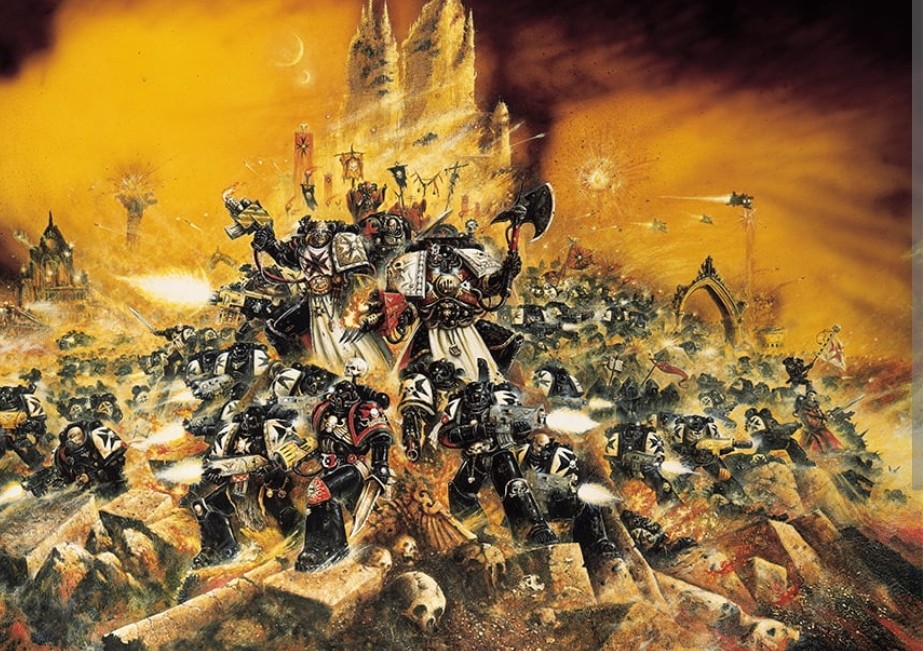
Ten thousand years after the Heresy, the Space Marines got their biggest change since the Codex. Before he was struck down, Guilliman had asked the Archmagos Belisarius Cawl to work on a better Space Marine. Cawl worked for the entire ten thousand years, and when Guilliman woke from stasis, the result was ready: the Primaris Space Marines.
Primaris Marines are larger and tougher than the older warriors, with extra organs that Cawl designed. Their gene-seed was made from the samples of the loyal Primarchs, so every Primaris Marine is still a son of one of the original Legions. Guilliman sent them out with the Indomitus Crusade as the Great Rift tore the galaxy apart.
This new wave of Chapters is called the Ultima Founding. It was enormous: hundreds of new Chapters made entirely of Primaris Marines, plus thousands of reinforcements given to the old Chapters, many of which had been close to extinction. Older Space Marines could also undergo dangerous surgery, called crossing the Rubicon Primaris, to become Primaris themselves. Many famous characters have done it, including Marneus Calgar.
In current Warhammer 40,000, the line between old and new Space Marines has mostly faded. Most armies now simply field "Space Marines", and the Primaris name mainly tells you where the warriors came from in the lore. If you want to start your own Chapter, a Space Marines Combat Patrol box is the easiest way in, and the latest Codex: Space Marines has the rules and paint schemes for many Chapters.
Where to read more
- Horus Rising (Dan Abnett): the first Horus Heresy novel, showing the Legions at the height of the Great Crusade.
- Legion (Dan Abnett): a peek behind the masks of the secretive Alpha Legion.
- Dark Imperium (Guy Haley): Guilliman returns, and the Primaris Marines march to war.
More Space Marines lore: read our all 20 Primarchs guide, the Ultramarines guide and the Roboute Guilliman page.
FAQ
What are the two missing Space Marine Legions?
The II and XI Legions. Their names, Primarchs and fates were erased from Imperial records before the Horus Heresy, and Games Workshop has never revealed what happened to them.
How many Space Marines are in a Chapter?
About 1,000, according to the Codex Astartes, usually in ten companies of 100. Some Chapters, like the Space Wolves and Black Templars, are believed to break this rule.
What is the difference between a Legion and a Chapter?
A Legion was a huge army of tens of thousands of Marines from the Great Crusade. After the Heresy the loyal Legions were split into Chapters of around 1,000 so no single commander could ever rebel with that much power again.
Which Legion has the most successor Chapters?
The Ultramarines. They were the largest Legion, and nearly three-fifths of all Chapters today descend from them, either directly or through their Second Founding Chapters.
Are the traitor Legions still around?
Yes. They were never split into Chapters. Many broke into Chaos warbands, while the Death Guard, Thousand Sons, World Eaters and Emperor's Children still fight as Legions, and the Sons of Horus became the Black Legion.
Which Legion are the Blood Ravens from?
Nobody knows. Their origin is deliberately left a mystery, and theories linking them to the Thousand Sons have never been confirmed.
Lore summarised in our own words from Black Library novels, codexes and community wikis. Warhammer and all related names are trademarks of Games Workshop; WIZY is an independent fan site.
Sources
- Lexicanum: Space Marine Legion wh40k.lexicanum.com
- Lexicanum: 2nd Founding wh40k.lexicanum.com
- Warhammer 40k Wiki: Primaris Space Marines warhammer40k.fandom.com
- Bell of Lost Souls: The 20 Space Marine Legions belloflostsouls.net
- Wargamer: Space Marine Chapters and Legions wargamer.com
- Goonhammer: Lore Explainer, the Codex Astartes goonhammer.com
Spot a mistake or know something we missed?
Tell us below. Only we see it, and we fix the page.