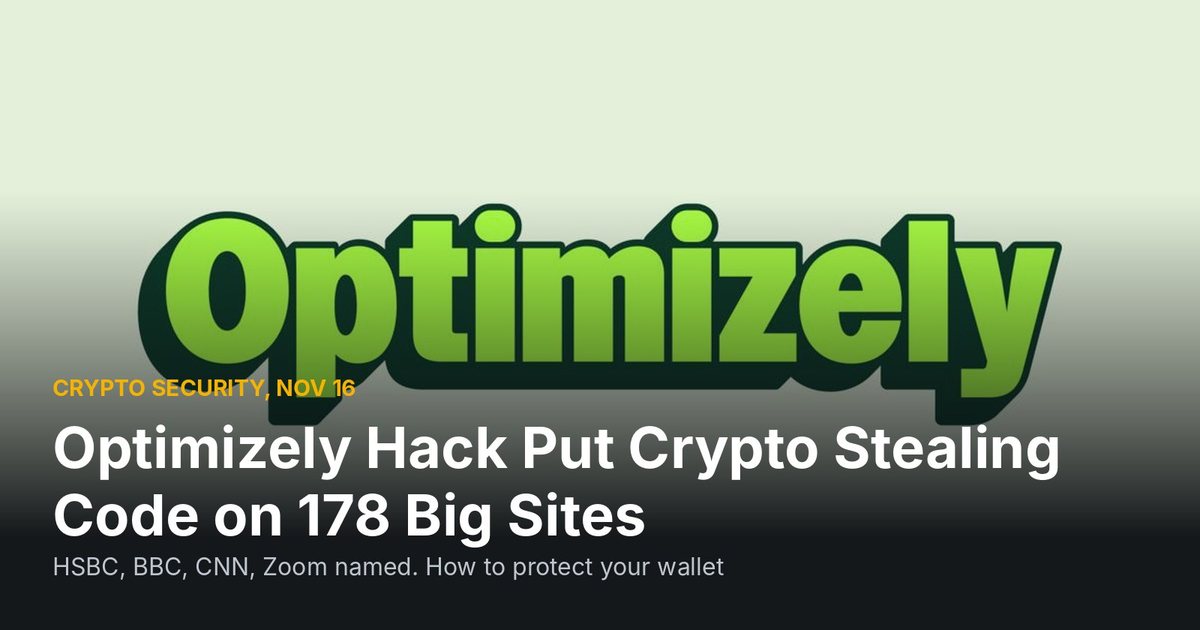
A hacker slipped crypto-stealing code into the websites of some very big names on Sunday, November 16, and none of those sites were hacked directly. The code came through Optimizely, a tool lots of companies use to test their web pages. Security researcher Scott Helme found it in 188 of the 1,611 Optimizely scripts he checked. Sites named in reports include HSBC, the BBC, CNN, Zoom and Ledger's website. Researchers are calling it OPTIMJACK.
Updated November 17, 2026. Figures from StepSecurity, Scott Helme (Report URI) and crypto.news; reported totals differ a bit between sources.
The short version
| When | Sunday, November 16, roughly 04:00 to 21:00 UTC |
| How | Malicious code added to Optimizely customer projects and served from Optimizely's own servers |
| Scale | 188 of 1,611 scripts checked were infected; 178 organizations (StepSecurity), 186 sites (other reports) |
| What it did | Swapped crypto wallet addresses, skimmed card numbers, targeted some iPhones |
| Stolen so far | About $7,040 in crypto as of Sunday evening, per Helme (not a final total) |
| Status | Optimizely says it fixed the flaw and removed the code |
What happened
Optimizely is a "website optimization" service. Companies put a small piece of Optimizely's code on their pages so they can test different layouts and see which one works better. That little snippet loads from Optimizely's servers every time someone visits.
That's where the attacker got in. According to StepSecurity, someone wrote malicious code into the Project JavaScript field of many Optimizely customer projects. Optimizely's status page says "an unauthorized party exploited a vulnerability in Experimentation," and a spokesperson told Gizmodo the hole was in the account signup flow. So every site using an infected project started serving the bad code to its own visitors. The companies' own websites were never broken into.
StepSecurity lists 178 affected organizations, including CNN, the BBC, Fox News, Zoom, Salesforce, GitLab, HSBC, KLM and IKEA. crypto.news also names Ledger's website, plus Coinpass, IG and Interactive Investor, and counts 186 sites. The exact numbers differ a bit by source, but the scale is huge.
How it tried to steal crypto
This is the sneaky part. The code was a "clipper." When you copy a crypto wallet address on an infected page, it quietly swaps it for the attacker's address. You paste, you send, and the money goes to them instead of where you meant it to go.
It was picky about it, too. It only swapped addresses that looked valid for that coin, and only when words like "wallet," "deposit" or "send" were nearby on the page. Reports say it went after Bitcoin, Ethereum and other EVM chains, TRON, Solana, TON, Litecoin, Bitcoin Cash and Dogecoin.
It wasn't just crypto. StepSecurity says the same code also tried to skim card numbers from checkout forms, and on some iPhones and iPads it loaded exploit kits, according to Helme.
The good news, if there is any: the haul so far looks small. Helme put the attacker's take at about $7,040 as of 19:25 UTC on Sunday. crypto.news counted about $6,600 in activity across four linked wallets, but warned that's not a confirmed stolen total, since some of that wallet activity started before the attack.
How to protect your crypto
Here's the thing. You can't control what code a big website loads. You can control how you send crypto. These habits would have stopped this attack cold:
We may earn a commission from links on this page.
- Check the address on your hardware wallet's screen before you approve. A clipper changes what's on your computer screen, not what's on the device. A hardware wallet shows the real address you're sending to. Compare at least the first and last 6 characters.
- Don't trust copy and paste blindly. After you paste an address, check it against the source again. If anything looks off, stop.
- Use saved addresses. If your exchange or wallet lets you save trusted addresses (an "address book" or "allowlist"), use it for places you send to often.
- Don't connect your wallet on random sites. Only connect to sites you trust and typed in yourself.
- Send a small test first for big amounts. Annoying, but cheap insurance.
- Update your iPhone or iPad if you're behind on iOS updates, since part of this attack targeted older versions.
If you entered card details or copied a wallet address on one of the affected sites between about 04:00 and 21:00 UTC on November 16, StepSecurity's advice is to replace the card and double-check any crypto you sent.
For the bigger picture on staying safe, Cryptoassets by Chris Burniske covers the basics of holding crypto the careful way.
Like this kind of news? Get the WIZY weekly: one email every Sunday, no spam.
Part of a rough season
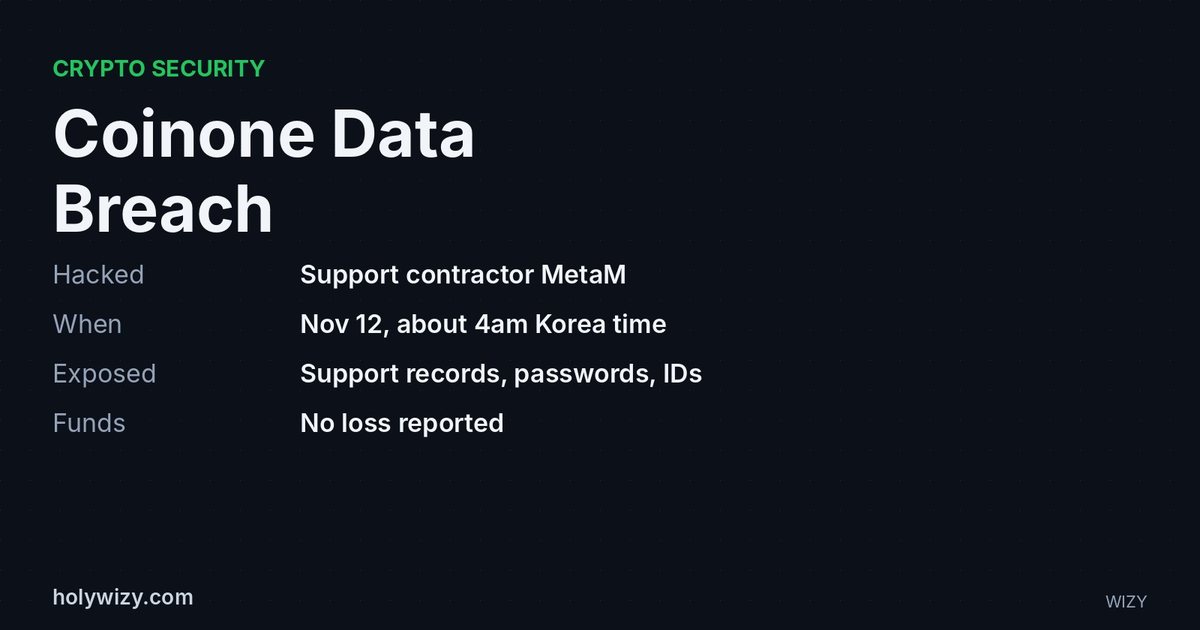
This one's going in our crypto hacks 2026 tracker too. Same lesson as the Coinone breach last week: the weak spot is often a third party, not the company you think you're dealing with.
FAQ
What is the Optimizely hack?
On November 16, 2026, an attacker injected malicious code into Optimizely customer projects. Sites using those projects served code that swapped crypto wallet addresses and skimmed card numbers.
Which sites were affected?
Reports name HSBC, the BBC, CNN, Fox News, Zoom, Salesforce, GitLab, KLM, IKEA and Ledger's website, among 178 to 186 total.
Is it fixed?
Optimizely says it fixed the flaw, removed the code and secured affected accounts.
This is news, not financial advice.
Sources
- StepSecurity: OPTIMJACK, Optimizely-hosted scripts loaded a crypto clipper and card skimmer on 178 organizations stepsecurity.io
- crypto.news: Optimizely supply chain attack targets crypto wallets across 186 websites crypto.news
- TokenPost: Suspected Optimizely supply-chain attack hits at least 186 sites tokenpost.com

Written by the WIZY creator
A lifelong gamer and Warhammer painter, and the maker of the WIZY RPG game. I write about games, hardware, Warhammer and crypto in plain English, and I check every fact against its source.