
Warhammer 40,000: Rogue Trader puts you in charge of a dynasty with a Warrant of Trade, a voidship and a whole sector of space to explore. It's a deep, turn-based RPG from Owlcat Games, and the first hours throw a lot of systems at you. This guide explains the choices that matter at character creation and the mechanics new players struggle with, without story spoilers.
The game today
- Released: December 7, 2023, on PC (Steam, GOG, Epic Games Store) and Mac, PS5 and Xbox Series X|S. A Nintendo Switch 2 version followed on December 11, 2025.
- Expansions: Void Shadows (September 24, 2024), Lex Imperialis (June 24, 2025) and The Infinite Museion (June 11, 2026). The final story DLC, Processional of the Damned, is due in December 2026.
- Difficulty presets: Story, Normal, Daring, Hard and Unfair. If you're new to turn-based RPGs, Story or Normal is a great place to start, and you can lower the difficulty for a tough fight and raise it again afterwards.
Character creation: what's permanent and what isn't
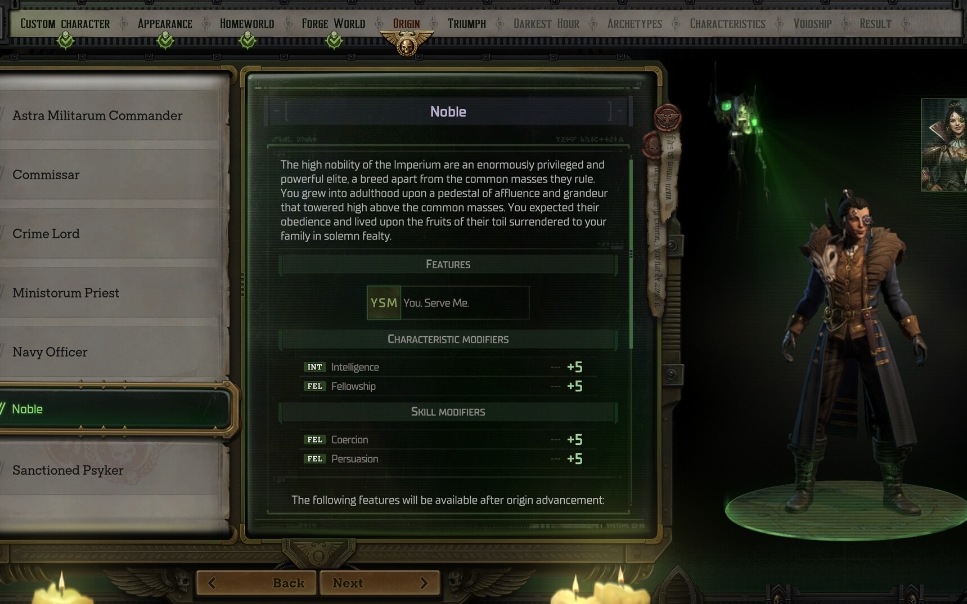
- Homeworld (for example Voidborn, Forge World or Hive World) and Origin (for example Commissar, Navy Officer, Noble or Sanctioned Psyker) are permanent. They shape your stats, talents and some dialogue, so pick what sounds fun to role-play.
- Want to play a psyker? That's chosen through the Sanctioned Psyker origin, not an archetype.
- Your archetype (your combat role) and talents can be changed later with a respec, so don't panic over them.
The four starting archetypes
- Warrior: a melee fighter and tank who stands in front and takes hits.
- Officer: a support leader who buffs allies and can give them extra turns. Very powerful in a good party.
- Operative: exposes enemy weaknesses so the rest of your party hits harder.
- Soldier: a ranged damage dealer.
The Void Shadows expansion adds a fifth starting archetype, the Bladedancer, a melee specialist. Later in the game, each archetype branches into more advanced ones.
Your first companions
You'll meet several companions early on, including Abelard Werserian (your seneschal), Argenta (a Battle Sister) and Idira Tlass (a psyker) during the prologue, followed by others like Pasqal Haneumann (a Tech-Priest), Heinrix van Calox (an Interrogator of the Inquisition) and Cassia Orsellio (a Navigator).
Some companions later in the game can be missed, so keep several manual saves.
Combat basics: Momentum and cover
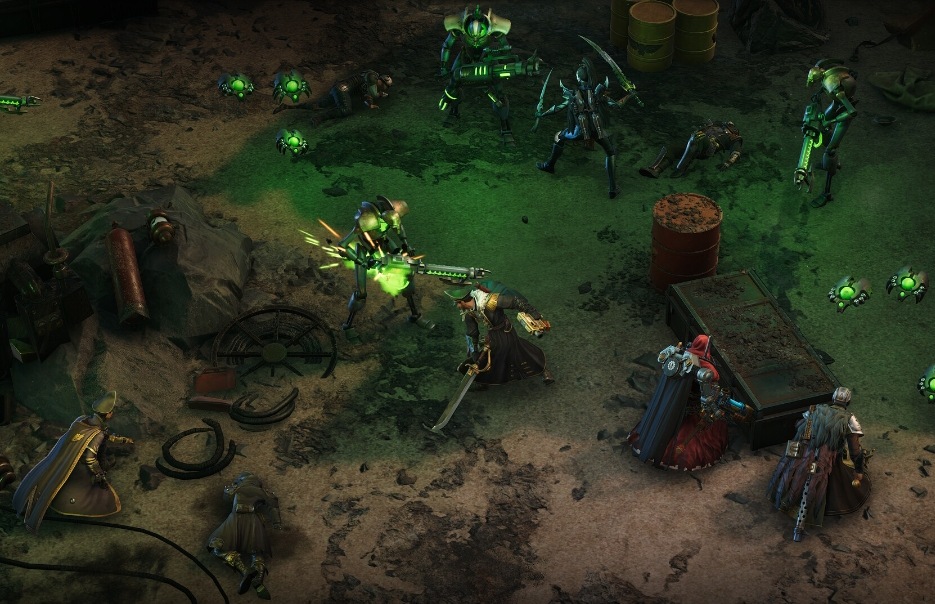
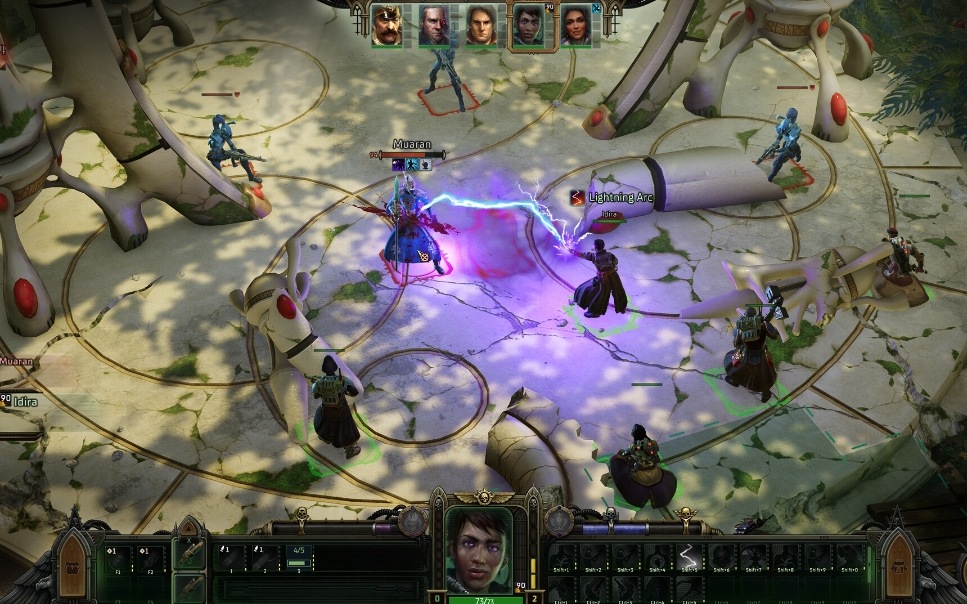
- Momentum is a bar your whole party shares. It starts each battle at 100 out of 200, rises when you kill enemies, and drops when your allies get hurt or killed.
- At high Momentum, characters can use a powerful Heroic Act. At low Momentum, they can use a Desperate Measure, which is strong but comes with a penalty.
- Cover comes in two types: half cover (a half-shield icon) and full cover (a full-shield icon). Shots can hit the cover instead of you, and smaller cover can be destroyed.
- Hover over a tile before you move to see line of sight and ranges. It saves a lot of bad moves.
Profit Factor: it's not money
This confuses almost everyone at first. Profit Factor measures your dynasty's wealth, and you don't spend it when you buy things. Instead, it works like a requirement: to buy an item, you need enough Profit Factor and enough reputation with that vendor's faction.
- Build reputation by selling cargo and loot to each faction.
- Profit Factor goes up through things like colony projects, contracts and some decisions.
Convictions: your moral path
Your choices push you along three paths: Dogmatic (devoted to the Imperium), Iconoclast (more humane and independent) and Heretical (toward Chaos). Going further down a path unlocks new dialogue options and abilities, so it pays to lean into one rather than jumping between all three.
Traveling the Koronus Expanse
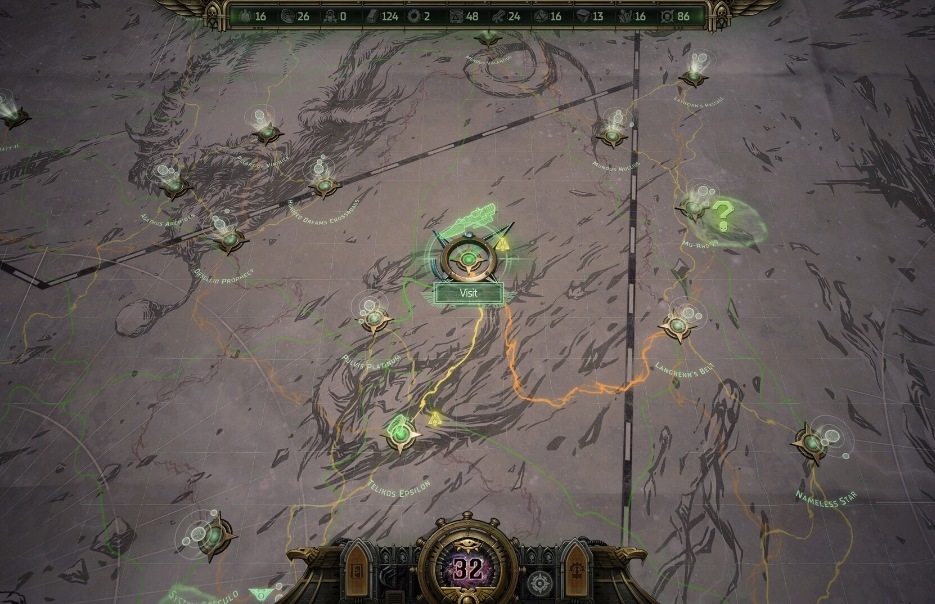
- Warp routes between star systems are color-coded by danger: green is safe, yellow is unsafe, orange is dangerous and red is deadly. Riskier routes mean more warp encounters.
- Spend Navigator's Insight to permanently make a route safer. Use it on routes you travel often.
- Colony projects can't be undone, so read them carefully before choosing.
Beginner tips
- You can respec. After the prologue, talk to Janris Danrok, the High Factotum on your voidship's bridge. Your first respecs are free, and after that they cost Profit Factor.
- Spread out your non-combat skills (like Lore, Tech-Use and Persuasion) across your party.
- Build Momentum by focusing fire to get kills and protecting your weakest allies.
- Use Officer abilities to give your hardest hitters extra turns.
- Sell cargo to factions to unlock their best vendors.
- Avoid red and orange warp routes early on.
- Save often, in different slots.
Beginner mistakes to avoid
- Treating Profit Factor like gold. You don't spend it.
- Stressing over your first archetype. You can respec.
- Rushing your Homeworld and Origin. Those are permanent.
- Taking dangerous warp routes too early.
- Only keeping one save.
My take
As a 40K tabletop player, Rogue Trader is the closest a video game has come to feeling like you're living inside the 40K universe: the politics, the faith, the heresy and the bolters. Take your time with the first few hours and it opens up into something special. Which origin did you pick?
Sources
- Owlcat Games: Rogue Trader news
- RPG Site: Rogue Trader launches December 7
- RPG Site: The Infinite Museion DLC is now available
- RPG Site: Processional of the Damned launches in December
- Prima Games: Rogue Trader classes explained
- PC Gamer: Rogue Trader companions
- Gamer Guides: Momentum, Desperate Measures and Heroic Acts
- Rogue Trader Wiki (Fextralife): Trade and Profit Factor
- Rogue Trader Wiki (Fextralife): Convictions
- Gamer Guides: Navigator's Insight and charting routes
- Prima Games: How to respec in Rogue Trader